
Cryptoscapes
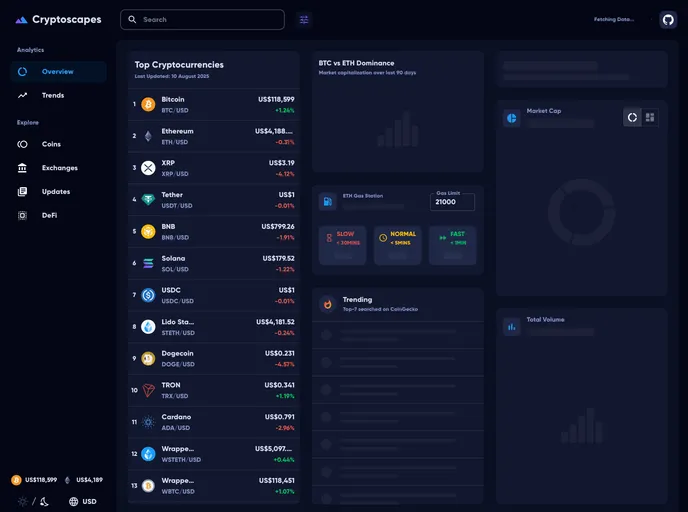


Cryptoscapes : A Cryptocurrency Information Dashboard for the Casual Enthusiast!
Overview:
Cryptoscapes is an innovative information dashboard designed to present cryptocurrency data in a clear and engaging format. Born from a college project, it combines essential skills such as state management, UI design, and project management. With the foundation laid on Redux and a commitment to atomic design principles, Cryptoscapes offers a user-friendly experience for anyone interested in tracking the crypto market.
The dashboard features a variety of visualizations, including charts and graphs, helping users grasp market trends, status updates, and more. Whether you're a crypto newbie or a seasoned investor, Cryptoscapes aims to simplify the complexity of cryptocurrency data into actionable insights.
Features:
- User-Friendly Interface: Designed with clean and intuitive navigation for easy access to data and insights.
- Dynamic Visualizations: Offers a variety of graphs and charts, including a heatmap to monitor metric correlations between cryptocurrencies.
- Real-Time Updates: Provides current prices, trends, and market snapshots to keep users informed on the latest developments.
- Responsive Design: Built with Material-UI, ensuring a seamless experience across devices and screen sizes.
- Data Sources: Utilizes reliable data from well-known platforms like CoinGecko and Blockchain.com for accuracy and credibility.
- Built on Modern Technologies: Developed using React, Redux, and TypeScript, ensuring robust performance and maintainability.
- Deployment on AWS: Ensures reliable uptime and speedy access to the dashboard for users.
- React
React is a widely used JavaScript library for building user interfaces and single-page applications. It follows a component-based architecture and uses a virtual DOM to efficiently update and render UI components
- Material UI
material-ui adds classes to Tailwind CSS for all common UI components. Classes like btn, card, etc. This allows us to focus on important things instead of making basic elements for every project.
- Recharts

Recharts is a powerful and easy-to-use React library for building customizable and interactive charts. Built on D3.js, it offers a wide range of pre-built chart types, such as line, bar, pie, and scatter charts, all of which can be composed with a declarative syntax.
- Redux
Redux is a state management library for JavaScript apps that provides a predictable and centralized way to manage application state. It enables developers to write actions and reducers that update the state in response to user interactions, server responses, and other events, and can be used with a variety of front-end frameworks and back-end technologies.
- Typescript

TypeScript is a superset of JavaScript, providing optional static typing, classes, interfaces, and other features that help developers write more maintainable and scalable code. TypeScript's static typing system can catch errors at compile-time, making it easier to build and maintain large applications.