
Http Cache Semantics
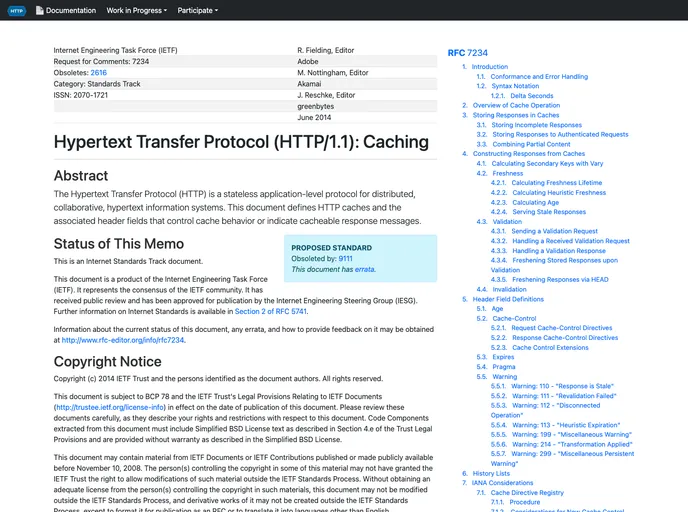

RFC 7234 in JavaScript. Parses HTTP headers to correctly compute cacheability of responses, even in complex cases
Overview
The caching library provides a robust solution for managing HTTP response caching, respecting the guidelines set forth by HTTP RFC 7234/9111. This tool is particularly beneficial for developers seeking to optimize their applications by reusing cached responses effectively. The library accommodates complexities in caching, such as handling the Vary header and ensuring that responses align with user agent and shared cache protocols.
Its functionality extends beyond simple caching rules, incorporating advanced features like stale-if-error and stale-while-revalidate directives from RFC 5861. The design ensures that only appropriately matched requests can leverage stored responses, ultimately enhancing the efficiency of web applications.
Features
- Advanced Cache Policy: The library provides a detailed CachePolicy object that tracks the cacheability of HTTP responses based on request and response attributes.
- Compatibility Checks: The method
satisfiesWithoutRevalidation(newRequest)verifies if a new request can utilize a cached response, catering to complex caching scenarios. - Shared vs. Single-User Caches: Configurable options allow for evaluation from either a shared cache perspective (where private responses are typically not cached) or a single-user cache perspective.
- Cache Heuristic: Users can set a fallback cache duration through
options.cacheHeuristic, helping manage how long responses should be cached based on their age. - Immutable Responses: The
options.immutableMinTimeToLivesetting lets developers specify a default cache duration for responses marked as Cache-Control: immutable. - Anti-Cache Directive Management: The option
options.ignoreCargoCultcan disregard common anti-cache instructions, a useful feature when working with misconfigured directives. - Storable Response Verification: The
storable()method determines whether a response can be saved in the cache, guiding developers on best practices for cache management.
- Fresh
Fresh is a full stack modern web framework for JavaScript and TypeScript developers, designed to make it trivial to create high-quality, performant, and personalized web applications. You can use it to create your home page, a blog, a large web application like GitHub or Twitter, or anything else you can think of. At its core, Fresh is a combination of a routing framework and templating engine that renders pages on demand, on the server