
Nest Elasticsearch Vue
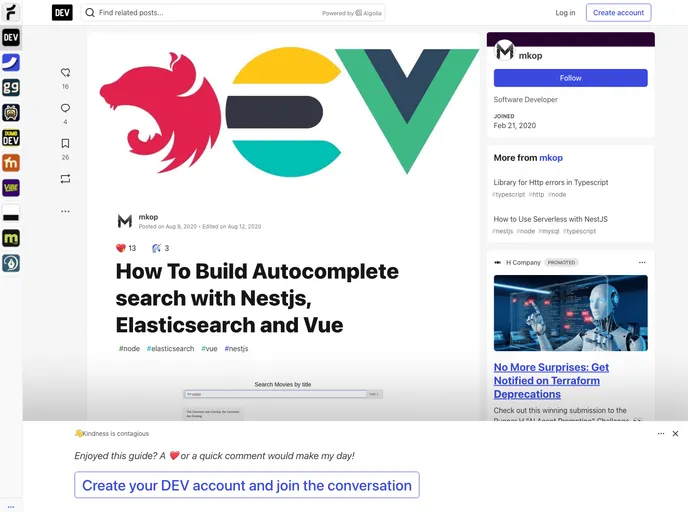


Autocomplete search with Nestjs, Elasticsearch and Vue
Overview
Setting up an autocomplete search feature using NestJS, Elasticsearch, and Vue is a great way to enhance user experience in any web application. This technology stack allows for a responsive and efficient search functionality that can significantly improve performance. Whether you're a developer looking to implement advanced search capabilities or a business owner wanting to refine your website's user interface, understanding the key steps in this setup can be invaluable.
Features
- Seamless Integration: Easily combine NestJS for backend services, Elasticsearch for advanced search capabilities, and Vue for a dynamic front-end experience.
- Docker Setup: Use Docker to create a local development environment, simplifying the setup process and ensuring consistency across different machines.
- Environment Configuration: Quickly configure your project by updating the .env file with your specific Elasticsearch node URL, facilitating connection management.
- Local Development: Start your project easily with access to a localhost URL, allowing for immediate testing and iteration on your autocomplete search feature.
- User-Friendly Search: Improve the overall user experience by implementing an autocomplete feature that helps users find what they need faster.
- Nest
A progressive Node.js framework for building efficient, scalable, and enterprise-grade server-side applications with TypeScript/JavaScript.
- Vue
Vue.js is a lightweight and flexible JavaScript framework that allows developers to easily build dynamic and reactive user interfaces. Its intuitive syntax, modular architecture, and focus on performance make it a popular choice for modern web development.
- Typescript

TypeScript is a superset of JavaScript, providing optional static typing, classes, interfaces, and other features that help developers write more maintainable and scalable code. TypeScript's static typing system can catch errors at compile-time, making it easier to build and maintain large applications.