
Kinhdev24 Portfolio
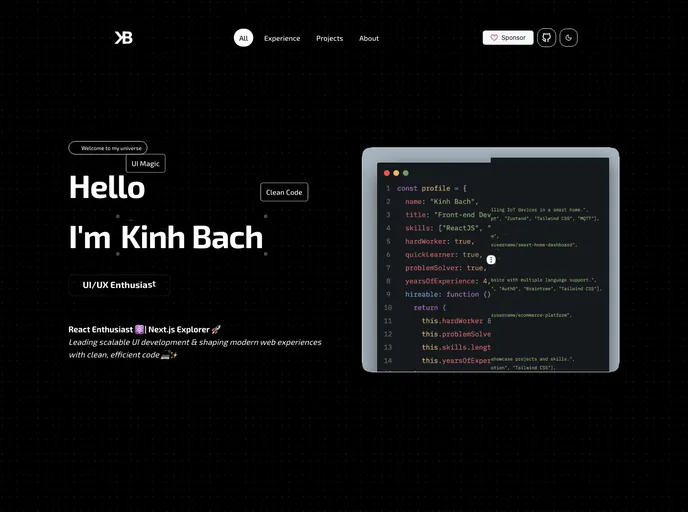



Developer portfolio
Overview
If you're looking for a modern and efficient way to showcase your skills and projects as a developer, this portfolio built with Next.js 15 and enhanced with MagicUI and AceternityUI might be just what you need. It's designed for a seamless user experience with a clean, professional layout that adapts to various devices. With a focus on performance and interactivity, this portfolio emphasizes your professional journey while making a lasting impression on potential employers or clients.
The integration of cutting-edge technology not only makes for a visually attractive portfolio but also ensures functionality and ease of access. Whether you're jumping between light and dark themes or showcasing your projects, this portfolio framework has got you covered.
Features
- Light/Dark Mode: Easily switch between themes for an optimal viewing experience that suits your preference.
- Modern Design: Enjoy a polished, professional interface with smooth animations for an engaging user experience.
- Fully Responsive: Optimized for all devices, ensuring your portfolio looks great on desktops, tablets, and smartphones.
- Performance Optimized: Fast loading times due to optimized assets, keeping viewers engaged and interested.
- Interactive Elements: Features engaging user experience with smooth transitions and dynamic content.
- SEO Friendly: Well-structured for search engines to improve visibility and attract more visitors.
- Accessibility: Built with best practices in mind to ensure it's usable by everyone, including those with disabilities.
- Spotify Integration: Embedded playlist adapts to the current theme, allowing you to share your favorite music directly.
- Next.js
Next.js is a React-based web framework that enables server-side rendering, static site generation, and other powerful features for building modern web applications.
- React
React is a widely used JavaScript library for building user interfaces and single-page applications. It follows a component-based architecture and uses a virtual DOM to efficiently update and render UI components
- Tailwind
Tailwind CSS is a utility-first CSS framework that provides pre-defined classes for building responsive and customizable user interfaces.
- Shadcn UI
Beautifully designed components that you can copy and paste into your apps. Accessible. Customizable. Open Source.
- Portfolio

A portfolio website is a type of website that showcases an individual's or a company's work, skills, and accomplishments. It typically includes a gallery of images or videos, case studies, and client testimonials to provide potential clients or employers with a comprehensive overview of their experience and expertise.
- Eslint

ESLint is a linter for JavaScript that analyzes code to detect and report on potential problems and errors, as well as enforce consistent code style and best practices, helping developers to write cleaner, more maintainable code.
- Motion

Motion (formerly Framer Motion) is a production-ready animation library for React and JavaScript. It provides a simple declarative API for creating fluid animations, gestures, and transitions with excellent performance and accessibility.
- Typescript

TypeScript is a superset of JavaScript, providing optional static typing, classes, interfaces, and other features that help developers write more maintainable and scalable code. TypeScript's static typing system can catch errors at compile-time, making it easier to build and maintain large applications.