
NextLMS



Code With Antonio - Build an LMS Platform: Next.js 13, React, Stripe, Mux, Prisma, Tailwind, MySQL | https://youtu.be/Big_aFLmekI?si=vv-QnJ3A36wfhZva
Overview
The LMS platform is an impressive educational tool that provides a robust framework for building and managing online courses. Developed as part of a tutorial series, this platform integrates cutting-edge technologies such as Next.js and React, ensuring a modern and responsive user experience. With features designed for both students and teachers, it offers an intuitive interface that simplifies the process of course management and user interaction.
Notably, the platform emphasizes functionality with easy-to-use features for browsing, purchasing, and progressing through courses. Coupled with powerful dependency tools and a planned integration for quizzes, the LMS platform is a promising solution for anyone looking to enter the world of online education, whether as a developer or an educational institution.
Features
-
Course Browsing & Filtering: Users can easily browse and filter courses to find the right fit for their learning needs.
-
Stripe Payment Integration: A seamless payment option allows users to purchase courses with confidence and security.
-
Progress Tracking: Students can mark chapters as completed or uncompleted, effectively tracking their course progress.
-
User Dashboards: Separate dashboards for students and teachers provide tailored experiences and easy access to necessary tools.
-
Course Creation: Instructors can create new courses and chapters, facilitating content delivery with ease.
-
Drag-and-Drop Functionality: Easily reorder chapter positions using a simple drag-and-drop mechanism, making course organization intuitive.
-
Rich Text Editor: Utilize a comprehensive editor for crafting detailed chapter descriptions, enhancing content engagement.
-
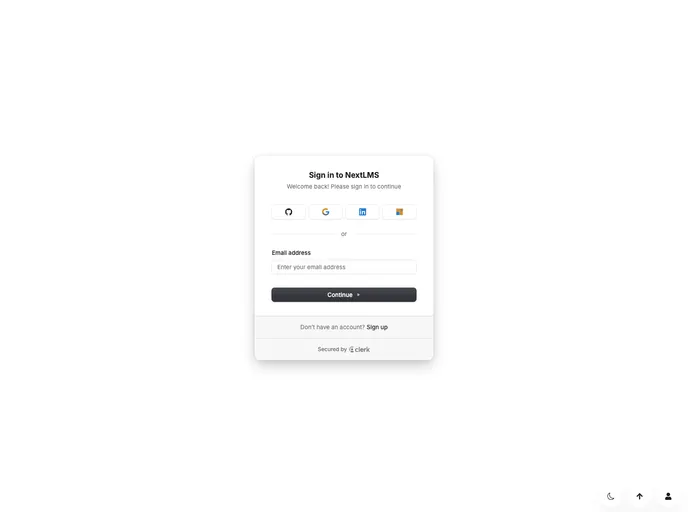
Robust Authentication: Secure user authentication powered by Clerk ensures a smooth and protected experience for learners.
- Next.js
Next.js is a React-based web framework that enables server-side rendering, static site generation, and other powerful features for building modern web applications.
- React
React is a widely used JavaScript library for building user interfaces and single-page applications. It follows a component-based architecture and uses a virtual DOM to efficiently update and render UI components
- TanStack
TanStack is a collection of high-quality, framework-agnostic libraries including TanStack Query for data fetching, TanStack Router for routing, TanStack Table for tables, and more. These tools provide powerful, type-safe solutions for common web development challenges.
- Tailwind
Tailwind CSS is a utility-first CSS framework that provides pre-defined classes for building responsive and customizable user interfaces.
- cmdk
cmdk is a fast, composable command menu component for React. It provides the foundation for building command palettes, search interfaces, and keyboard-navigable menus similar to those found in applications like VS Code, Linear, and Raycast.
- Prisma
Prisma is a server-side library that helps developers read and write data to the database in an intuitive, efficient and safe way.
- Fullstack

A fullstack boilerplate provides a starter application that includes both frontend and backend. It should include database, auth, payments, user roles and other backend services to build a fully featured saas or webapps.
- Eslint

ESLint is a linter for JavaScript that analyzes code to detect and report on potential problems and errors, as well as enforce consistent code style and best practices, helping developers to write cleaner, more maintainable code.
- Postcss

PostCSS is a popular open-source tool that enables web developers to transform CSS styles with JavaScript plugins. It allows for efficient processing of CSS styles, from applying vendor prefixes to improving browser compatibility, ultimately resulting in cleaner, faster, and more maintainable code.
- React Hook Form

React Hook Form is a performant, flexible, and extensible form library for React with easy validation. It reduces re-renders and improves performance by using uncontrolled components and native HTML validation, making form handling simple and efficient.
- Recharts

Recharts is a powerful and easy-to-use React library for building customizable and interactive charts. Built on D3.js, it offers a wide range of pre-built chart types, such as line, bar, pie, and scatter charts, all of which can be composed with a declarative syntax.
- Typescript

TypeScript is a superset of JavaScript, providing optional static typing, classes, interfaces, and other features that help developers write more maintainable and scalable code. TypeScript's static typing system can catch errors at compile-time, making it easier to build and maintain large applications.
- Zod

Zod is a TypeScript-first schema declaration and validation library. It allows you to define schemas that can validate data at runtime while providing excellent TypeScript inference, making it perfect for API validation, form validation, and type-safe data handling.
- Zustand
Zustand is a lightweight state management library for React that provides a simple and intuitive API for managing state in your application. It allows developers to easily create and manage global state, and provides a powerful set of tools for optimizing performance and improving developer productivity. Zustand is designed to be easy to use and easy to learn, making it a popular choice for developers of all skill levels.