
Nextjs With Pages Mui Starter Ts
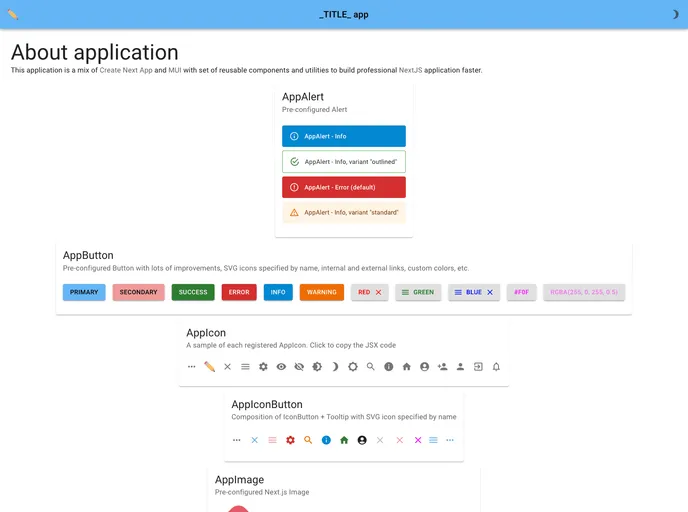


Starter for Next.js with Pages Router + Material UI + TypeScript
Overview
This article is a product analysis of a starter project for Next.js with Pages Router + Material UI using TypeScript. The project provides a mix of Create Next App and MUI with a set of reusable components and utilities, aiming to help developers build professional NextJS applications faster. However, the author warns that the template could be deprecated in the future as the App Router is becoming the preferred choice. The article also provides instructions on how to install and use the starter project.
Features
- Combination of Create Next App and MUI
- Reusable components and utilities
- TypeScript integration
- Development mode with live reload
- Code formatting and linting support
- Test runner with interactive watch mode
- Production and local development build options
- Deprecated static site generator version for building SSG
Summary
This product analysis discusses a starter project for Next.js with Pages Router + Material UI using TypeScript. It highlights the key features, installation process, and available scripts to run and build the application. The article also mentions the possible deprecation of this template in the future due to the preference towards the App Router.
- Next.js
Next.js is a React-based web framework that enables server-side rendering, static site generation, and other powerful features for building modern web applications.
- React
React is a widely used JavaScript library for building user interfaces and single-page applications. It follows a component-based architecture and uses a virtual DOM to efficiently update and render UI components
- Material UI
material-ui adds classes to Tailwind CSS for all common UI components. Classes like btn, card, etc. This allows us to focus on important things instead of making basic elements for every project.
- Eslint

ESLint is a linter for JavaScript that analyzes code to detect and report on potential problems and errors, as well as enforce consistent code style and best practices, helping developers to write cleaner, more maintainable code.
- Typescript

TypeScript is a superset of JavaScript, providing optional static typing, classes, interfaces, and other features that help developers write more maintainable and scalable code. TypeScript's static typing system can catch errors at compile-time, making it easier to build and maintain large applications.