
Livecanvas
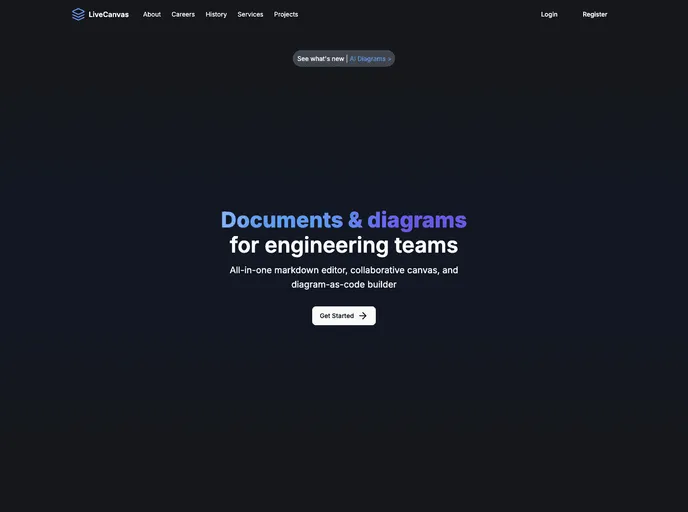




LiveCanvas is a modern, feature-rich collaborative whiteboard and diagramming application built for engineering teams. Create documents, diagrams, and visual content together in real-time using a powerful stack including Next.js, Tailwind CSS, Shadcn/UI, Convex Database, and Kinde Authentication.
Overview
LiveCanvas is an innovative collaborative whiteboard and diagramming tool designed specifically for engineering teams. It allows users to create visual content, diagrams, and documents collectively in real-time, promoting an interactive and dynamic way of working together. Built on a powerful tech stack, this application not only showcases modern web technologies but also epitomizes collaborative open-source development, making it a suitable choice for teams looking to elevate their brainstorming and collaboration processes.
By integrating features that support effective idea visualization and teamwork, LiveCanvas serves as a versatile platform for professionals aiming to enhance productivity. Its user-friendly interface and cutting-edge functionalities make it an attractive option for teams that prioritize seamless collaboration.
Features
- Real-time Collaboration: Multiple users can work on the same document simultaneously, allowing for instant feedback and interaction.
- User-friendly Interface: A clean and intuitive design ensures that team members can easily navigate and utilize the tools available without a steep learning curve.
- Powerful Tech Stack: Built with Next.js, Tailwind CSS, and other advanced technologies, ensuring a responsive and high-performance application.
- Visual Content Creation: Users can create a variety of diagrams and documents, tailored to meet specific project needs, enhancing the overall brainstorming experience.
- Open-source Development: Contributions and feedback are encouraged, making it a community-driven tool that continually evolves based on user needs.
- Extensive Support for Features: Additional functionalities such as bug reporting and feature requests via GitHub add to the comprehensive user experience.
- Integration with Kinde Authentication: Provides secure user access and management, enhancing the collaborative environment without compromising safety.
- Next.js
Next.js is a React-based web framework that enables server-side rendering, static site generation, and other powerful features for building modern web applications.
- React
React is a widely used JavaScript library for building user interfaces and single-page applications. It follows a component-based architecture and uses a virtual DOM to efficiently update and render UI components
- Tailwind
Tailwind CSS is a utility-first CSS framework that provides pre-defined classes for building responsive and customizable user interfaces.
- Shadcn UI
Beautifully designed components that you can copy and paste into your apps. Accessible. Customizable. Open Source.
- Convex
Convex is a fullstack TypeScript development platform that provides a reactive database, serverless functions, and real-time sync out of the box. It simplifies backend development with automatic caching, optimistic updates, and type-safe queries.
- Eslint

ESLint is a linter for JavaScript that analyzes code to detect and report on potential problems and errors, as well as enforce consistent code style and best practices, helping developers to write cleaner, more maintainable code.
- Postcss
PostCSS is a popular open-source tool that enables web developers to transform CSS styles with JavaScript plugins. It allows for efficient processing of CSS styles, from applying vendor prefixes to improving browser compatibility, ultimately resulting in cleaner, faster, and more maintainable code.
- Typescript

TypeScript is a superset of JavaScript, providing optional static typing, classes, interfaces, and other features that help developers write more maintainable and scalable code. TypeScript's static typing system can catch errors at compile-time, making it easier to build and maintain large applications.