
Sveltekit Blog Template
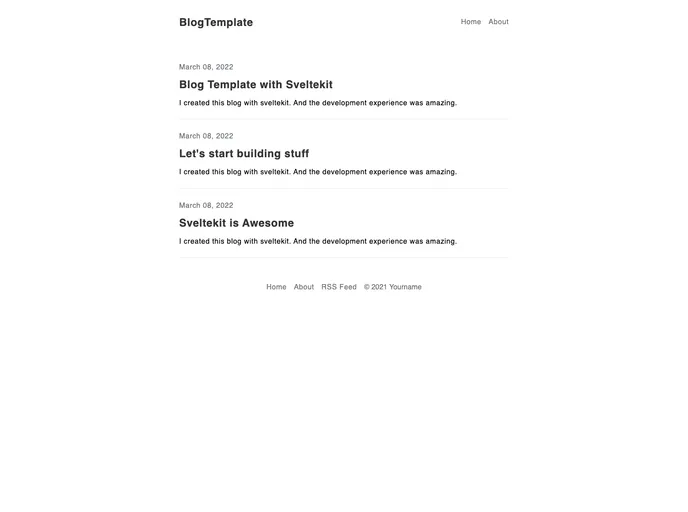


A minimalistic markdown based blog template built with Sveltekit(v1.0+)
Overview
The Sveltekit-blog-template is a minimalistic markdown based blog template built with Sveltekit. It offers a simple and clean UI, making it easy to create and manage a blog with markdown content. The template is optimized for performance and SEO, and comes with features like code syntax highlighting and an RSS feed. Deployment is made easy with Vercel, requiring zero configuration.
Features
- Markdown Based Content: Create blog posts using markdown syntax for easy formatting.
- Code Syntax Highlighting: Code snippets in blog posts are highlighted for better readability.
- Great Performance: The template is optimized for performance, ensuring fast loading times.
- Minimalistic UI: The design is minimalistic and focused on the content, providing a distraction-free reading experience.
- SEO Friendly: The template is designed to be search engine friendly, making it easier for your blog to be discovered.
- RSS Feed: Easily generate an RSS feed to allow readers to subscribe to your blog.
- Easy Deployment with Vercel: Deploying the blog template is hassle-free with Vercel, requiring no configuration.
Summary
The Sveltekit-blog-template is a minimalistic blog template built with Sveltekit. It offers markdown-based content creation, code syntax highlighting, great performance, a minimalistic UI, SEO friendliness, an RSS feed, and easy deployment with Vercel. With its simplicity and ease of use, it provides a strong foundation for creating a blog with Sveltekit.
- Svelte
Svelte is a modern front-end framework that compiles your code at build time, resulting in smaller and faster applications. It uses a reactive approach to update the DOM, allowing for high performance and a smoother user experience.
- Vite
Vite is a build tool that aims to provide a faster and leaner development experience for modern web projects
- Blog

Blog websites feature posts written by one or more authors, organized by categories and tags, with a section for comments and archives sorted by date or topic. Additional features may include search bar, social media sharing, subscription or RSS feed, about and contact pages, and visual content.
- Templates & Themes

A template or theme refers to a pre-designed layout or structure that provides a basic framework for building a specific type of application or website. It typically includes good design, placeholder content and functional features, allowing developers to customize and fill in the details according to their specific needs.
- Eslint

ESLint is a linter for JavaScript that analyzes code to detect and report on potential problems and errors, as well as enforce consistent code style and best practices, helping developers to write cleaner, more maintainable code.
- Typescript

TypeScript is a superset of JavaScript, providing optional static typing, classes, interfaces, and other features that help developers write more maintainable and scalable code. TypeScript's static typing system can catch errors at compile-time, making it easier to build and maintain large applications.