
JuliaCodesGatsby
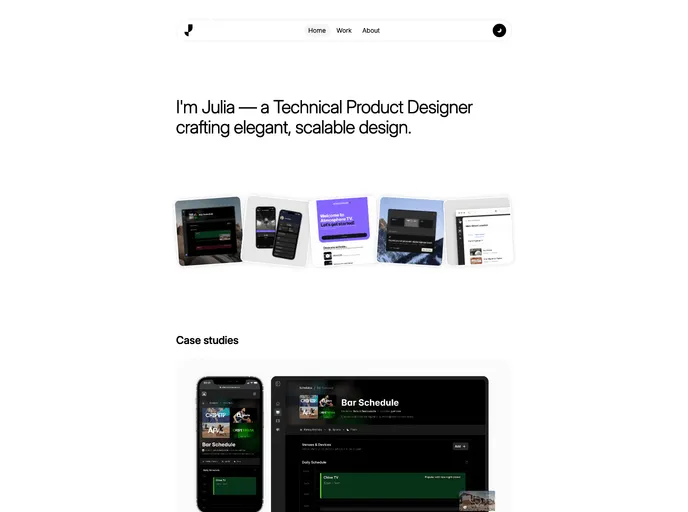


Refreshed Portfolio Page Built and Designed by Julia Johnson
Overview
Julia Johnson has recently updated her personal portfolio page, juliacodes.com, showcasing her skills and innovative projects. Built with modern web technologies such as React and Styled Components, the site is designed to give a fresh and engaging experience to visitors, reflecting her passion for coding and design.
In an era where a strong online presence is crucial, Julia's portfolio stands out due to its clean aesthetics and responsive design. Utilizing Netlify for deployment, the site is not only visually appealing but also ensures fast load times and reliable performance. This update is an exciting opportunity for users to explore her work and gain insights into her capabilities as a developer.
Features
- Modern Technology Stack: Built with React and Styled Components, ensuring a dynamic user experience and beautiful design elements.
- Responsive Design: The portfolio adapts seamlessly to various devices, providing an optimal viewing experience on both mobile and desktop.
- Easy Navigation: Intuitive layout that allows users to quickly find information about Julia's projects and skills.
- Personal Touch: Reflects Julia's unique style and personality, showcasing her creativity and approach to problem-solving.
- Fast Loading Times: Hosted on Netlify, the site benefits from quick load speeds, enhancing user engagement.
- Showcase of Projects: Features a well-organized presentation of her work, highlighting her abilities and the diversity of her projects.
- Continuous Updates: Regularly maintained to ensure it stays current with her latest work and technologies, reflecting her growth as a developer.
- Gatsby
GatsbyJS is a free and open-source static site generator based on React. It uses a modern development stack including Webpack, GraphQL, and modern JavaScript and CSS frameworks. It also provides a rich set of plugins, starters, and themes.
- React
React is a widely used JavaScript library for building user interfaces and single-page applications. It follows a component-based architecture and uses a virtual DOM to efficiently update and render UI components
- Styled Components
Styled Components is a popular library for styling React components using CSS syntax. It allows you to write CSS in your JavaScript code, making it easier to create dynamic styles that are specific to each component.
- Tailwind
Tailwind CSS is a utility-first CSS framework that provides pre-defined classes for building responsive and customizable user interfaces.
- Portfolio

A portfolio website is a type of website that showcases an individual's or a company's work, skills, and accomplishments. It typically includes a gallery of images or videos, case studies, and client testimonials to provide potential clients or employers with a comprehensive overview of their experience and expertise.
- Postcss

PostCSS is a popular open-source tool that enables web developers to transform CSS styles with JavaScript plugins. It allows for efficient processing of CSS styles, from applying vendor prefixes to improving browser compatibility, ultimately resulting in cleaner, faster, and more maintainable code.