
Hydrogen Contact Form Metaobject
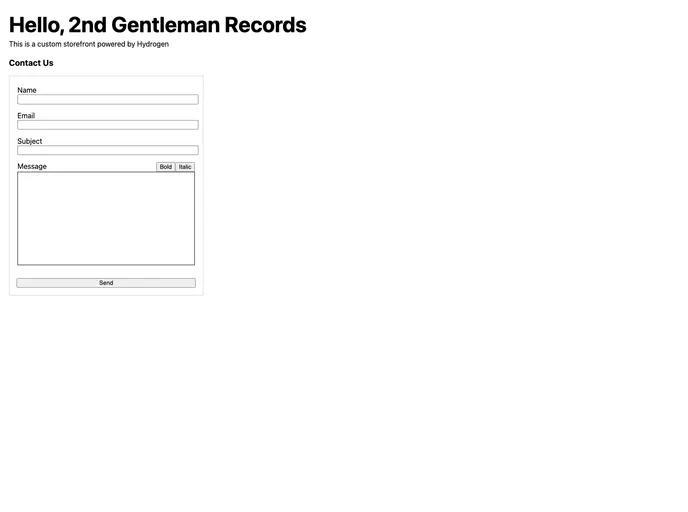



Hydrogen basic contact form using a custom metaobject and the Admin API
Overview
Hydrogen Contact Form is a feature provided by the Hydrogen stack, Shopify's headless commerce system. It allows users to add a simple contact form to their website and manage the creation of contact form entries. This article provides a guide on how to install and set up the contact form.
Features
- Simple contact form creation
- Management of contact form metaobject entries
- Integration with Shopify's full stack web framework, Remix
- Includes Remix, Hydrogen, Oxygen, Shopify CLI, ESLint, Prettier, GraphQL generator, TypeScript, and JavaScript flavors
- Minimal setup of components and routes
Summary
The Hydrogen Contact Form is a useful feature provided by Shopify's headless commerce system. It allows users to easily add a contact form to their website and manage the entries submitted through the form. The installation process is straightforward and requires a few steps to set up the necessary environment variables and build for production. With the Hydrogen Contact Form, users can enhance their website's functionality and improve customer interaction.
- React
React is a widely used JavaScript library for building user interfaces and single-page applications. It follows a component-based architecture and uses a virtual DOM to efficiently update and render UI components
- Remix
Remix is a modern JavaScript framework that focuses on building fast and performant web applications. It emphasizes a combination of server-rendered content and client-side interactivity, offering a robust architecture for creating scalable and maintainable projects.
- Shopify
Shopify offers headless commerce capabilities through its Storefront API, allowing developers to use their own front-end technology to create custom storefronts or sales channels while using Shopify as a back-end system
- Eslint

ESLint is a linter for JavaScript that analyzes code to detect and report on potential problems and errors, as well as enforce consistent code style and best practices, helping developers to write cleaner, more maintainable code.
- Graphql
A website that uses GraphQL as a query language to manage data fetching and state management. This includes features such as a strongly typed schema, client-side caching, and declarative data fetching to streamline data management and optimize website performance.
- Typescript

TypeScript is a superset of JavaScript, providing optional static typing, classes, interfaces, and other features that help developers write more maintainable and scalable code. TypeScript's static typing system can catch errors at compile-time, making it easier to build and maintain large applications.