
Django Rest Framework Jwt
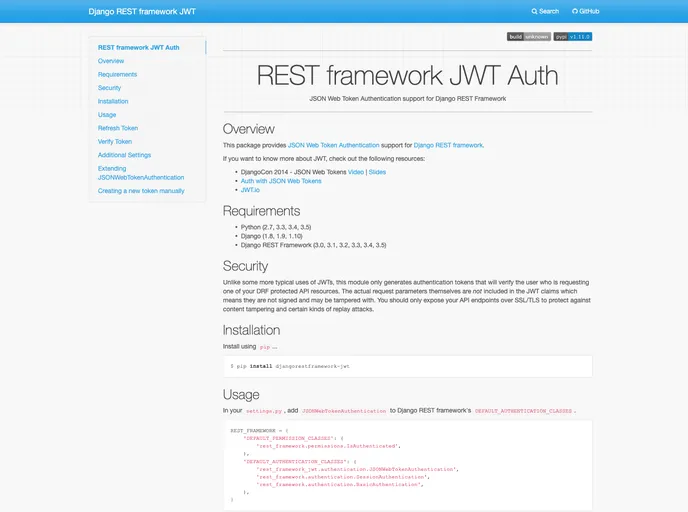

JSON Web Token Authentication support for Django REST Framework
Overview
Django Rest Framework Jwt offers a robust solution for authentication in Django REST applications through the implementation of JSON Web Tokens (JWT). This authentication method provides a secure way to transmit information between clients and servers, ensuring that sensitive user data remains protected while maintaining a seamless user experience. The integration of JWTs into your Django REST Framework projects simplifies the authentication process, making it easier to manage user sessions and control access to API resources.
Features
- Secure Authentication: Employs JSON Web Tokens, providing a secure method for authenticating users and protecting sensitive information.
- Easy Integration: Designed to seamlessly integrate with the Django REST Framework, making it easy to implement in existing projects.
- Stateless Sessions: Utilizes stateless sessions, allowing your application to scale efficiently without storing session data on the server.
- Revocation Options: Supports token revocation, ensuring that you can invalidate user tokens when necessary, enhancing security.
- Custom Claims: Allows the addition of custom claims to tokens, enabling you to include extra information tied to user sessions.
- Expiration Management: Features configurable token expiration times, giving you control over how long tokens remain valid.
- Error Handling: Provides built-in error handling for common authentication issues, improving the overall user experience during the login process.
- Django
Django is a high-level Python web framework that encourages rapid development and clean, pragmatic design. It follows the model-view-controller (MVC) architectural pattern, providing an extensive set of built-in tools and conventions to streamline the creation of robust and scalable web applications.