
Nestjs Mongoose

NestJS / Mongoose Example
Overview
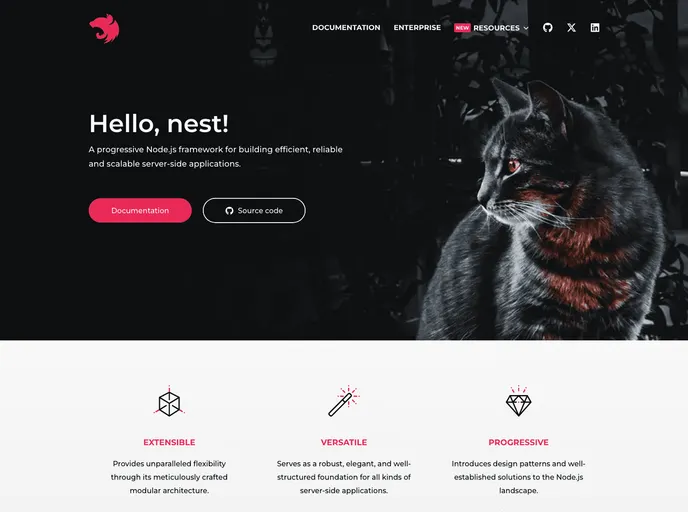
If you're looking to enhance your TypeScript skills while diving into the world of NestJS, the Nest TypeScript Starter is an excellent choice. This starter template sets the stage for building efficient, reliable, and scalable server-side applications using NestJS and TypeScript. It provides a robust architecture that leverages the strengths of these technologies, making it ideal for both beginners and experienced developers.
With a well-organized structure and best practices in mind, the Nest TypeScript Starter allows developers to kickstart their projects quickly. Its modular design promotes reusability and maintainability, ensuring that your application can evolve as your needs grow.
Features
-
TypeScript Support: Built with TypeScript from the ground up, offering a statically typed environment to catch errors early in the development process.
-
Modular Architecture: Organizes your code into modules, providing a clear separation of concerns to improve maintainability and scalability.
-
Dependency Injection: Utilizes a powerful Dependency Injection system, which simplifies the management of components and enhances testability.
-
Comprehensive Documentation: Accompanied by detailed documentation, making it easier for developers to get started and understand the core concepts.
-
Built-in Testing Framework: Includes support for testing out of the box with tools like Jest, allowing you to write and run tests seamlessly.
-
Development Tools: Comes with handy development tools, including a CLI that streamlines the process of creating modules, controllers, and services.
-
Integration Ready: Designed to easily integrate with various databases and third-party services, providing flexibility for your project's needs.
- Nest
A progressive Node.js framework for building efficient, scalable, and enterprise-grade server-side applications with TypeScript/JavaScript.
- Typescript

TypeScript is a superset of JavaScript, providing optional static typing, classes, interfaces, and other features that help developers write more maintainable and scalable code. TypeScript's static typing system can catch errors at compile-time, making it easier to build and maintain large applications.