
Django Sockpuppet
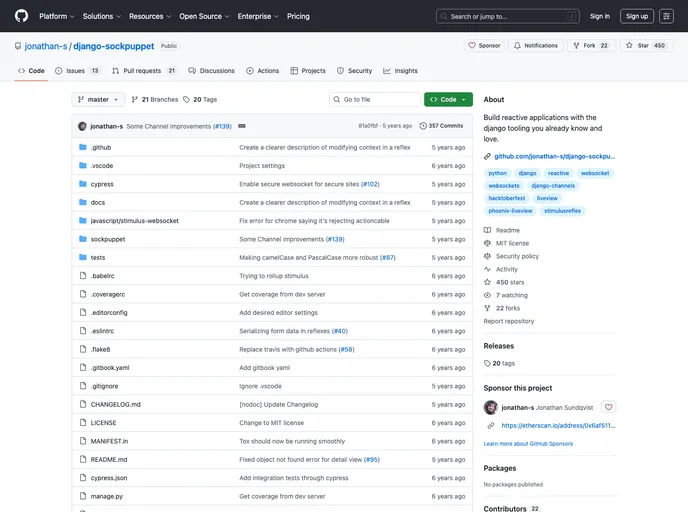

Build reactive applications with the django tooling you already know and love.
Overview
Django has long been a go-to framework for developers wanting to build robust web applications. With its latest integration for modern frontend frameworks, a new era of dynamic web development has begun. This innovative approach allows developers to utilize familiar Django templates while enjoying the benefits of real-time interactivity through technologies like websockets. By merging the strengths of server-rendered HTML with reactive frontend libraries, Django now offers a more straightforward and less convoluted way to create modern applications.
The library provides a refreshing take on app development, particularly for those who find the traditional API-based methods cumbersome. With seamless synchronization between frontend changes and backend updates, developers can now focus on building applications without the constant back-and-forth that typically comes from managing state across separate layers.
Features
- Seamless Integration with Django: Leverage existing Django templates while enjoying real-time interactivity typical of modern frameworks.
- State Synchronization: Any changes made to the frontend state are instantly reflected in the backend, minimizing complex data handling.
- WebSockets Support: Utilizes websockets for efficient real-time communication between the frontend and backend, enhancing app responsiveness.
- Inspired by Proven Technologies: This library draws inspiration from the robust stimulus-reflex library and Phoenix LiveView, ensuring a reliable and effective structure.
- Community Engagement: Join a vibrant community on Discord dedicated to Django and stimulus-reflex discussions, fostering collaboration and support.
- Comprehensive Documentation: Access detailed documentation to get started quickly and effectively, ensuring a smooth learning curve.
- Integration Testing: Built-in integration tests ensure that both frontend and backend components work harmoniously together, providing peace of mind during development.
- Django
Django is a high-level Python web framework that encourages rapid development and clean, pragmatic design. It follows the model-view-controller (MVC) architectural pattern, providing an extensive set of built-in tools and conventions to streamline the creation of robust and scalable web applications.
- Eslint

ESLint is a linter for JavaScript that analyzes code to detect and report on potential problems and errors, as well as enforce consistent code style and best practices, helping developers to write cleaner, more maintainable code.
- Rollup

RollupJS is a popular and efficient JavaScript module bundler that takes the code from multiple modules and packages them into a single optimized file, minimizing the overall size of the application and improving its performance.
- Webpack

Webpack is a popular open-source module bundler for JavaScript applications that bundles and optimizes the code and its dependencies for production-ready deployment. It can also be used to transform other types of assets such as CSS, images, and fonts.