
Worktory
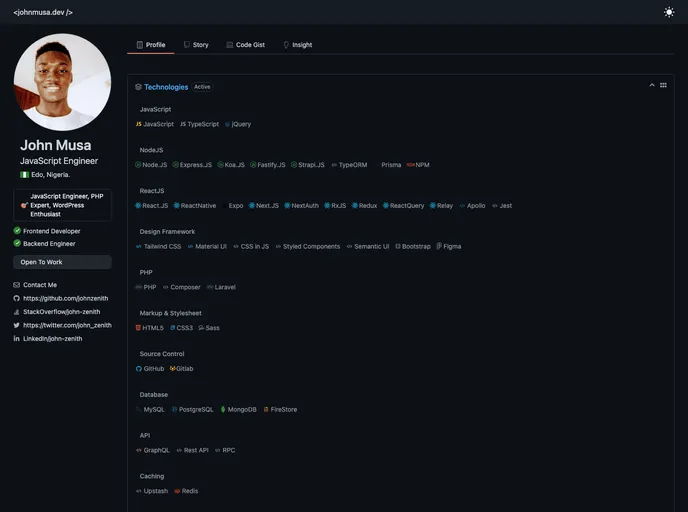


Portfolio library replicating the GitHub UI
Overview:
This article provides an introduction to a Next.js project that is bootstrapped with create-next-app. It explains how to get started with the project, how to edit the pages, and how to access the API routes. It also provides additional resources for learning more about Next.js and suggests using the Vercel Platform for deploying the app.
Features:
- Next.js project: The project is built using Next.js, a popular React framework for building server-side rendered applications.
- create-next-app: The project is bootstrapped with create-next-app, a command-line tool for creating new Next.js projects.
- Development server: The article explains how to run the development server for the project, which allows you to see the result in your browser.
- Editing pages: The article guides you on how to edit the pages of the project by modifying the pages/index.tsx file. It mentions that the page auto-updates as you edit the file.
- API routes: The article explains how to access the API routes of the project. It mentions that the default API route is /api/hello and explains how to edit it.
- Next.js documentation: The article suggests checking out the Next.js documentation as a resource for learning more about the features and API of Next.js.
- Learn Next.js: The article mentions an interactive Next.js tutorial called "Learn Next.js" as another resource for learning about Next.js.
- Next.js GitHub repository: The article suggests visiting the Next.js GitHub repository for feedback and contributions to the project.
- Deploying on Vercel: The article suggests using the Vercel Platform for deploying the Next.js app and provides a link to the Next.js deployment documentation for more details.
Summary:
This article introduces a Next.js project that is set up using create-next-app. It explains how to get started with the project by running the development server and editing the pages. It also provides information on accessing the API routes and suggests additional resources for learning more about Next.js. The article concludes by suggesting using the Vercel Platform for deploying the Next.js app.
- Next.js
Next.js is a React-based web framework that enables server-side rendering, static site generation, and other powerful features for building modern web applications.
- React
React is a widely used JavaScript library for building user interfaces and single-page applications. It follows a component-based architecture and uses a virtual DOM to efficiently update and render UI components
- Tailwind
Tailwind CSS is a utility-first CSS framework that provides pre-defined classes for building responsive and customizable user interfaces.
- Portfolio

A portfolio website is a type of website that showcases an individual's or a company's work, skills, and accomplishments. It typically includes a gallery of images or videos, case studies, and client testimonials to provide potential clients or employers with a comprehensive overview of their experience and expertise.
- Eslint

ESLint is a linter for JavaScript that analyzes code to detect and report on potential problems and errors, as well as enforce consistent code style and best practices, helping developers to write cleaner, more maintainable code.
- Postcss

PostCSS is a popular open-source tool that enables web developers to transform CSS styles with JavaScript plugins. It allows for efficient processing of CSS styles, from applying vendor prefixes to improving browser compatibility, ultimately resulting in cleaner, faster, and more maintainable code.
- Typescript

TypeScript is a superset of JavaScript, providing optional static typing, classes, interfaces, and other features that help developers write more maintainable and scalable code. TypeScript's static typing system can catch errors at compile-time, making it easier to build and maintain large applications.