
Kirby Headless Starter
Headless-first Kirby starter with bearer token authentication and KQL utilities
Overview
The Kirby Headless Starter framework is an innovative solution designed for developers looking to create a headless site with ease. By leveraging the flexibility of Kirby, this starter kit provides an efficient way to retrieve JSON-encoded data through KQL (Kirby Query Language) or the native template system, making it a highly adaptable choice for modern web projects. Whether you’re building a sleek frontend with Nuxt or looking to optimize an existing Kirby installation, this toolkit offers the foundational elements needed to streamline your development process.
Not only does this starter kit improve the workflow for creating headless sites, but it also ensures that developers have the requisite support for multi-language queries and modern authentication methods. The integration of the Kirby Headless Plugin enhances its capabilities, enabling a seamless build environment that caters to a diverse set of project requirements.
Features
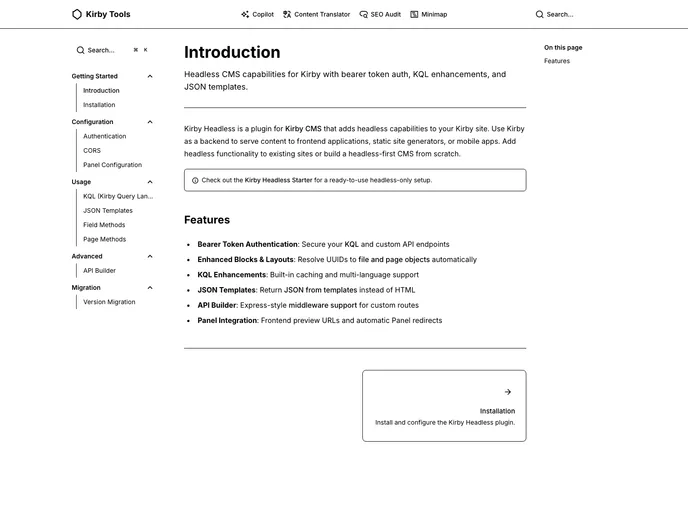
- Optional Bearer Token Authentication: Secure your API endpoints with optional bearer token authentication for KQL and custom APIs, adding an extra layer of security to your application.
- Field Resolution in Blocks: Easily resolve fields within blocks, transforming UUIDs into file and page objects, streamlining your data handling process.
- Cached KQL Queries: Improve performance with cached KQL queries, ensuring faster response times and better resource management.
- Multi-Language Support: Build applications that cater to a global audience with robust multi-language support for KQL queries, allowing seamless content delivery in various languages.
- Built-in CORS Handling: Simplify your development workflow with built-in Cross-Origin Resource Sharing (CORS) handling, accommodating requests from different origins without hassle.
- Express-esque API Builder: Utilize a familiar API design pattern with middleware support, making it easy to customize your API routes and responses.
- JSON from Templates: Return JSON directly from templates instead of HTML, making it effortless to work with front-end frameworks and enhance your application's interactivity.