
Tailwind Ecommerce Template
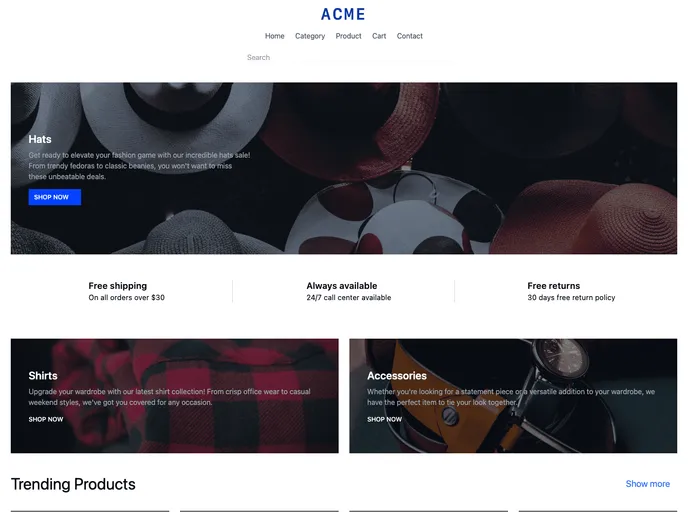

TailwindCSS Ecommerce Template
Overview:
The Tailwind CSS Ecommerce Template is an e-commerce site template implemented with TailwindCSS, HTML, css.gg Icons, and light interaction from alpine.js. It provides a responsive and customizable design for building an e-commerce website. The template can be viewed at https://jluterek.github.io/tailwind-ecommerce-template/.
Features:
- TailwindCSS: The template is built using TailwindCSS, a highly customizable CSS framework, providing a wide range of utility classes for styling elements.
- HTML: The template utilizes HTML for structuring the website's content, making it easy to understand and modify.
- css.gg Icons: It includes css.gg Icons, a collection of open-source icon icons that can be easily used in the website design.
- Alpine.js: The template incorporates light interaction from alpine.js, a lightweight JavaScript framework focused on providing declarative syntax for building interactive web interfaces.
Summary:
The Tailwind CSS Ecommerce Template is a responsive and customizable e-commerce site template built using TailwindCSS, HTML, css.gg Icons, and alpine.js. It provides a modern and visually appealing design for creating an e-commerce website. The installation process is straightforward, requiring the cloning of the repository, installing dependencies, and running the appropriate commands. With its flexible and easy-to-use features, this template serves as a great starting point for building an e-commerce site.
- Tailwind
Tailwind CSS is a utility-first CSS framework that provides pre-defined classes for building responsive and customizable user interfaces.
- Ecommerce

Ecommerce websites sell products or services to customers through an online storefront. These websites typically include features such as product listings, shopping carts, payment processing, and order management tools.
- Postcss

PostCSS is a popular open-source tool that enables web developers to transform CSS styles with JavaScript plugins. It allows for efficient processing of CSS styles, from applying vendor prefixes to improving browser compatibility, ultimately resulting in cleaner, faster, and more maintainable code.