
Rmwc
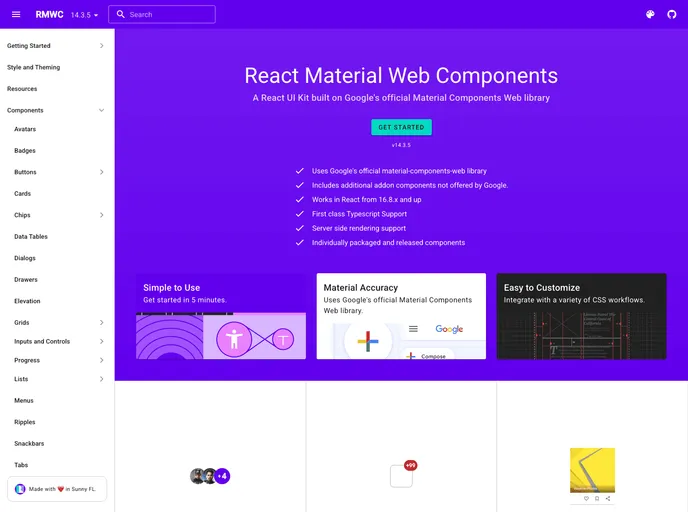

A React wrapper for Material Design (Web) Components
Overview
Rmwc is an innovative React wrapper that enables developers to easily implement Material Design components within their web applications. Designed to simplify the integration of Material Design into React projects, it offers a streamlined approach to creating aesthetically pleasing user interfaces while adhering to modern design principles. With Rmwc, developers can create polished, responsive layouts that enhance user experience and maintain consistency across different platforms.
Features
-
Easy Integration: Rmwc makes it simple to include Material Design components in your React applications, requiring minimal setup while preserving React's component-centric architecture.
-
Comprehensive Component Library: Rmwc offers a rich selection of customizable components, such as buttons, cards, and dialogs, ensuring developers have the tools they need to build engaging UI experiences.
-
Theming Support: With built-in theming capabilities, Rmwc allows developers to easily switch between different styles, making it simple to create cohesive visual designs tailored to their brand identity.
-
Accessibility Focused: Rmwc components prioritize accessibility by adhering to WAI-ARIA standards, ensuring that applications are usable by people with diverse needs.
-
Responsive Design: The components provided by Rmwc are designed to be mobile-first, automatically adjusting to different screen sizes for optimal performance on various devices.
-
Community-Driven: Rmwc benefits from a vibrant community and is continually updated, which ensures that developers have access to the latest features and improvements in Material Design.
- React
React is a widely used JavaScript library for building user interfaces and single-page applications. It follows a component-based architecture and uses a virtual DOM to efficiently update and render UI components
- UI Kits & Components

A UI kit provides developers with a set of reusable components that can be easily integrated into a website or application. These components are pre-designed with consistent styling and functionality, allowing developers to save time and effort in the design and development process. UI kits can be either custom-built or third-party, and often include components for buttons, forms, typography, icons, and more.