
Neobruu
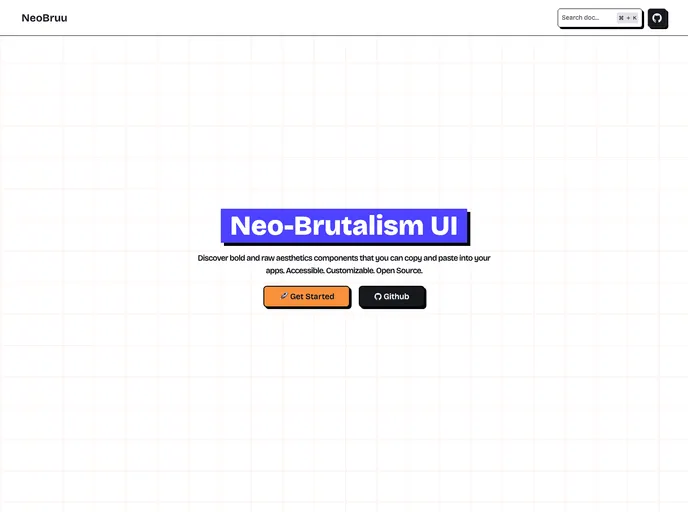


NeoBruu is a collection of type-safe components written in React and Tailwind.
Overview
NeoBruu is an innovative collection of Neo-Brutalist reusable components crafted specifically for modern web development using React and Tailwind CSS. This library is designed to signify a shift towards unique and unconventional aesthetics while ensuring that simplicity, functionality, and accessibility remain at the forefront. Whether you're an individual developer working on a personal project or part of a larger team tackling an enterprise-level application, NeoBruu offers essential building blocks to help you create visually engaging and efficient user interfaces.
With a commitment to both form and function, NeoBruu stands out as an inspiring toolkit for developers eager to explore the boundaries of design while maintaining high standards for usability and performance. The emphasis on type-safe components also enhances maintainability, making NeoBruu a brilliant choice for any project.
Features
- Neo-Brutalist Design: Embrace unconventional design elements and distinctive color palettes that challenge traditional aesthetics.
- React and Tailwind CSS: Leverage React for component-based development alongside Tailwind CSS, allowing for rapid and flexible styling.
- Type-Safe Components: Gain confidence in your code with type-safe components that ensure maintainability and reduce runtime errors.
- Open-Source Collaboration: Join a vibrant community where you can contribute, suggest new features, and collaborate on ideas to improve the library.
- Comprehensive Documentation: Access detailed documentation to help you get started quickly and effectively use all features of NeoBruu.
- MIT License: Built under a permissive MIT license, facilitating easy use and adaptation in various projects.
- Next.js
Next.js is a React-based web framework that enables server-side rendering, static site generation, and other powerful features for building modern web applications.
- React
React is a widely used JavaScript library for building user interfaces and single-page applications. It follows a component-based architecture and uses a virtual DOM to efficiently update and render UI components
- Tailwind
Tailwind CSS is a utility-first CSS framework that provides pre-defined classes for building responsive and customizable user interfaces.
- Eslint

ESLint is a linter for JavaScript that analyzes code to detect and report on potential problems and errors, as well as enforce consistent code style and best practices, helping developers to write cleaner, more maintainable code.
- Turborepo

Turbo is an incremental bundler and build system optimized for JavaScript and TypeScript, written in Rust.
- Typescript

TypeScript is a superset of JavaScript, providing optional static typing, classes, interfaces, and other features that help developers write more maintainable and scalable code. TypeScript's static typing system can catch errors at compile-time, making it easier to build and maintain large applications.