
Ismir Home
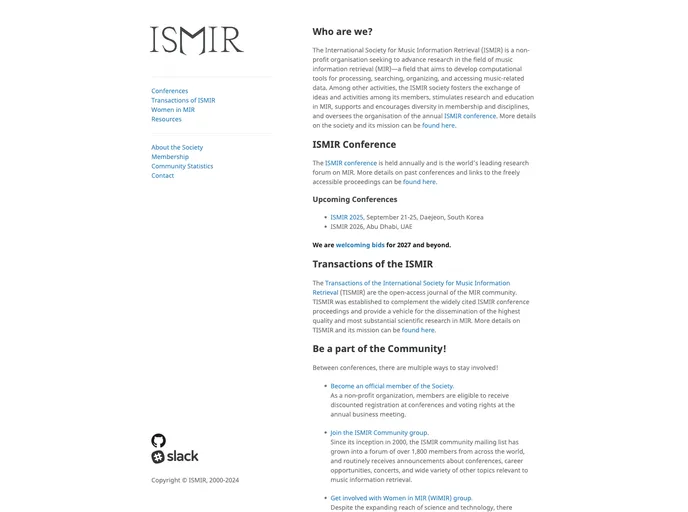
ISMIR Homepage in Jekyll
Overview
The ISMIR Homepage, powered by Jekyll, serves as a vital resource for the music information retrieval community. It streamlines the process of content updates, making it simpler for contributors to enhance the website and ensure the information remains accurate. Whether you're looking to improve publication metadata or update datasets, ISMIR provides an accessible way for users to get involved and contribute to its continuous evolution.
The user-friendly interface allows collaborators to make changes easily through a straightforward method—forking the site, editing as needed, and creating a pull request. This approach not only fosters a collaborative environment but also ensures that the homepage stays relevant and informative for all visitors.
Features
-
Easy Contribution Process: Contributors can fork the website, make edits directly in their browser, and submit pull requests for changes, making it simple to improve content.
-
Multiple Information Sources: The site aggregates data from various sources, including conference archives and individual dataset repositories, ensuring comprehensive coverage of music information topics.
-
Publication Metadata Maintenance: Users can report incorrect publication metadata directly through the conference-archive repository, promoting accuracy across the platform.
-
Dataset Management: The mir-datasets repository allows community members to propose updates or additions to the dataset list, supporting ongoing research and development in music information retrieval.
-
Historical Conference Websites: Past conference websites are preserved in individual repositories, accessible as separate GitHub Pages sites, maintaining their relevance for academic research.
-
Local Development Environment: Built with Jekyll, the site allows for local development, enabling extensive changes and testing before deploying updates to the live site.
-
Streamlined Technical Documentation: Detailed instructions on running a local Jekyll server and configuration are provided, which is particularly helpful for contributors with technical backgrounds wanting to develop features locally.