
Reactorstrap
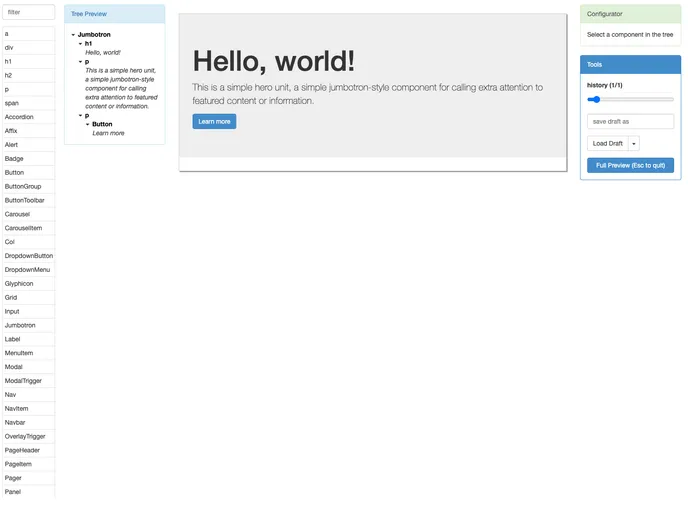

drag&drop UI Kit for reactorstrap
Overview
The Reactorstrap Drag & Drop UI Kit is an innovative toolkit designed for building user interfaces with React, primarily utilizing the Reactorstrap framework. This versatile kit enables developers to effortlessly create, manage, and visualize component trees. With its user-friendly design and efficient drag-and-drop functionality, it appeals to both novice and experienced developers aiming to streamline their UI development process.
By integrating a range of components and leveraging native HTML5 capabilities, the Reactorstrap UI Kit aims to enhance productivity and improve the overall user experience. Its ability to manage both component state and props in real-time positions it as a valuable resource for those looking to create dynamic web applications.
Features
-
Main Component (Reactor): Central to managing the app's component tree and syncing children components, ensuring that the UI remains up-to-date with minimal effort.
-
Component Catalog: A comprehensive library of components on the left side, allowing for easy selection and management of elements through a hashmap structure compatible with React.
-
Tree Preview: Utilizes the chenglou/treeview to create a visual representation of the app’s component hierarchy, enabling users to see their UI structure at a glance.
-
HTML5 Drag and Drop: Integrates native drag-and-drop functionality, allowing users to effortlessly rearrange or replace components within the tree.
-
Content Editable Children: Provides the ability to modify string children directly within the tree, promoting a more interactive setting for content management.
-
Configurator: A props editor for the selected component, designed to inspect and modify props dynamically, including providing specific UI elements for different prop types.
-
Immutable Library Integration: Uses the Facebook Immutable library to allow for deep updates in the component tree, ensuring efficient performance and elegant rendering of changes.
- React
React is a widely used JavaScript library for building user interfaces and single-page applications. It follows a component-based architecture and uses a virtual DOM to efficiently update and render UI components
- Gulp

Gulp.js is an old but popular site building tool that automates various repetitive development tasks in web development, such as compiling Sass, minifying JavaScript, and optimizing images.