
Www Sacred
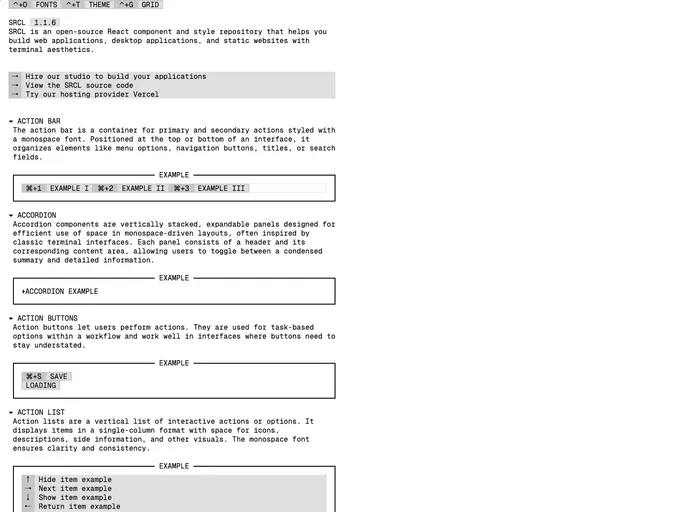



SRCL is an open-source React component and style repository that helps you build web applications, desktop applications, and static websites with terminal aesthetics.
Overview
SRCL is an innovative open-source React component and style repository designed to streamline the development of web applications, desktop applications, and static websites, all while embracing a unique terminal aesthetic. With its emphasis on precise monospace character spacing and line heights, SRCL provides developers with the tools they need to maintain clean and efficient codebases. This repository's modularity and ease of use allow for quick implementation of components, making it a go-to choice for developers who value efficiency and aesthetic appeal.
If you're looking to enhance your projects with a modern touch and enjoy the benefits of a well-structured library, SRCL could be the perfect addition to your development toolkit.
Features
- Open-Source: SRCL is completely open-source, allowing for community contributions and adaptations to suit specific project needs.
- Component Library: Offers a broad range of reusable components that are easy to customize and implement in various applications.
- Terminal Aesthetic: Focuses on a sleek, terminal-like appearance that enhances user experience while maintaining functionality.
- Modular Design: Components are designed to be modular, enabling developers to pick and choose what they need without unnecessary bloat.
- Efficient Codebase: Encourages a clean and efficient coding practice, making it easier to manage and scale your projects.
- Responsive Implementation: Built with responsive design in mind, ensuring that applications look great on all devices.
- Quick Copy-Paste Functionality: Streamlined implementation process allows developers to quickly copy and paste components, reducing development time.
- Next.js
Next.js is a React-based web framework that enables server-side rendering, static site generation, and other powerful features for building modern web applications.
- React
React is a widely used JavaScript library for building user interfaces and single-page applications. It follows a component-based architecture and uses a virtual DOM to efficiently update and render UI components
- SCSS
SCSS is a preprocessor scripting language that extends the capabilities of CSS by adding features such as variables, nesting, and mixins. It allows developers to write more efficient and maintainable CSS code, and helps to streamline the development process by reducing repetition and increasing reusability.
- UI Kits & Components

A UI kit provides developers with a set of reusable components that can be easily integrated into a website or application. These components are pre-designed with consistent styling and functionality, allowing developers to save time and effort in the design and development process. UI kits can be either custom-built or third-party, and often include components for buttons, forms, typography, icons, and more.
- Typescript

TypeScript is a superset of JavaScript, providing optional static typing, classes, interfaces, and other features that help developers write more maintainable and scalable code. TypeScript's static typing system can catch errors at compile-time, making it easier to build and maintain large applications.