
Meeting Selector
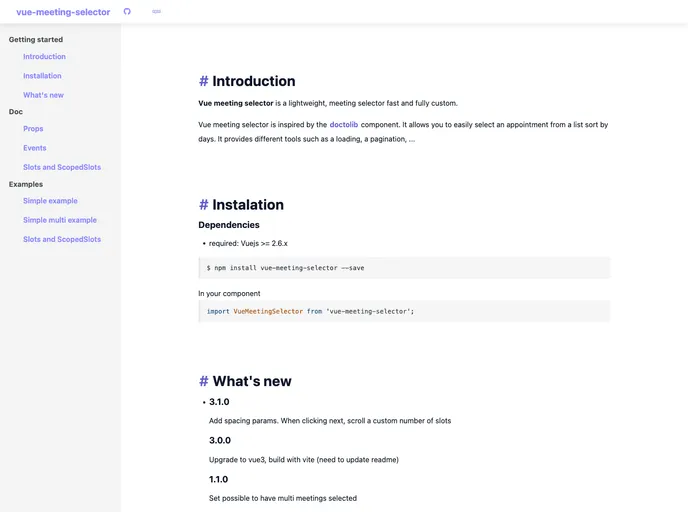

This component is inspired from the meeting selector from doctolib with the power of Vuejs or React components.
Overview
The Vue Meeting Selector is a powerful component designed for seamless meeting management, heavily inspired by the Doctolib meeting selector. Built with Vue.js, this component offers a modern interface to efficiently handle scheduling and management of meetings. Developers looking to streamline meeting selections will find this tool incredibly useful, as it allows for a high degree of customization and adaptability within their Vue applications.
The component not only simplifies the management of meeting slots but also boasts features that ensure an intuitive user experience. With its comprehensive documentation and straightforward setup, it is accessible for both seasoned developers and newcomers to Vue.js.
Features
- Flexible Date Handling: Easily manage meeting dates with the ability to pass in a string representation of dates, making it versatile for various applications.
- Dynamic Meeting Slots: Utilize the
v-modelfeature to handle single or multipleMeetingSlotinstances, which is essential for effective meeting scheduling. - Customizable Calendar Options: Adjust the calendar display to meet specific design needs through customizable options that cater to your application’s aesthetics.
- Event Handling: Built-in events like
meeting-slot-selectedandchangeprovide hooks for responding to user interactions, enhancing interactivity. - Scoped Slots for Customization: Leverage scoped slots to modify the display of each column, allowing for tailored views depending on the meetings or data presented.
- Loading State Management: Display loading indicators while data is being fetched, improving user experience by providing visual feedback during processing.
- Development-Friendly Setup: Comes with a development setup that includes hot-reloading, unit testing, and comprehensive compilation for both development and production environments.
- Community Collaboration: Encourages contributions, making it a community-driven project where developers can report issues and submit pull requests to continuously enhance the component.
- Vue
Vue.js is a lightweight and flexible JavaScript framework that allows developers to easily build dynamic and reactive user interfaces. Its intuitive syntax, modular architecture, and focus on performance make it a popular choice for modern web development.