
React Styled Floating Label
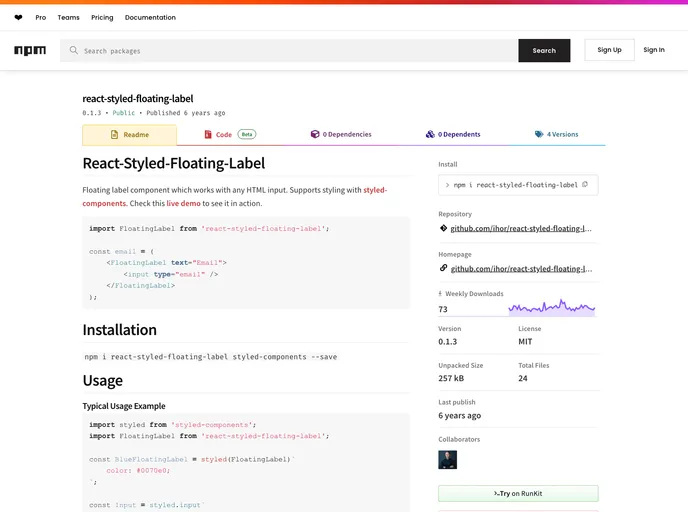


Floating label component which works with any HTML input
Overview
The React-Styled-Floating-Label is a dynamic component designed to enhance user input experiences with HTML forms. This component integrates a floating label directly with any standard HTML input, facilitating a clean and intuitive interface that enhances accessibility and usability. Built to work seamlessly with styled-components, this floating label component allows for easy customization and integration into existing projects without significant overhead.
This versatile component serves as both a label and placeholder, encouraging better form handling while maintaining aesthetic appeal. Whether you're developing a simple form or a complex web application, the React-Styled-Floating-Label offers a streamlined solution for input styling and management.
Features
- Easy Installation: Quickly integrate the component into your project with a simple npm command:
npm i react-styled-floating-label styled-components --save. - Customizable Styles: Supports styling with styled-components, allowing developers to apply custom styles effortlessly.
- Flexible API Options: Various props are provided, such as
textfor label text andstylefor custom label styles, enhancing versatility. - Advanced Placeholder Styling: Customize placeholder styles using standard CSS properties with the
--placeholder-prefix for a unique look and feel. - Custom Positioning: Offers options for custom positioning of the floating label, ensuring it fits perfectly within any form layout.
- Container Customization: Allows the use of different HTML elements for the component container, providing better integration with different contexts.
- Demo Availability: Easily visualize the component in action through provided demo options, making it easy to see customization possibilities.
- React
React is a widely used JavaScript library for building user interfaces and single-page applications. It follows a component-based architecture and uses a virtual DOM to efficiently update and render UI components
- Styled Components
Styled Components is a popular library for styling React components using CSS syntax. It allows you to write CSS in your JavaScript code, making it easier to create dynamic styles that are specific to each component.
- Eslint

ESLint is a linter for JavaScript that analyzes code to detect and report on potential problems and errors, as well as enforce consistent code style and best practices, helping developers to write cleaner, more maintainable code.
- Typescript

TypeScript is a superset of JavaScript, providing optional static typing, classes, interfaces, and other features that help developers write more maintainable and scalable code. TypeScript's static typing system can catch errors at compile-time, making it easier to build and maintain large applications.
- Webpack

Webpack is a popular open-source module bundler for JavaScript applications that bundles and optimizes the code and its dependencies for production-ready deployment. It can also be used to transform other types of assets such as CSS, images, and fonts.