
Django Siteblocks
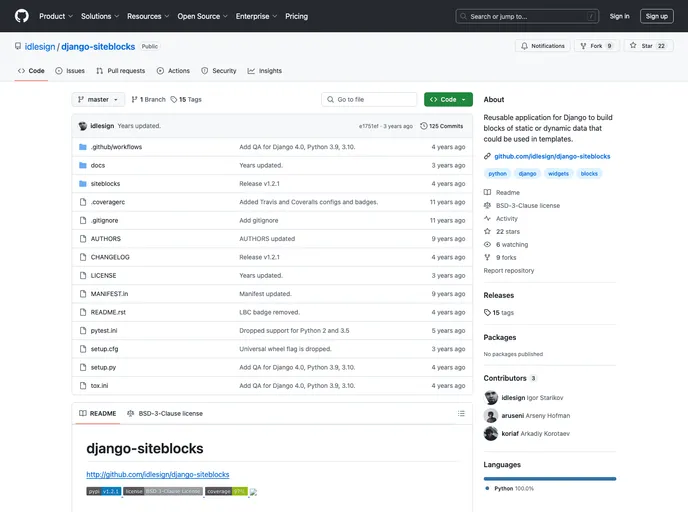

Reusable application for Django to build blocks of static or dynamic data that could be used in templates.
Overview
Django Siteblocks is a powerful application designed for Django developers who want to create reusable blocks of static or dynamic data within their templates. Whether you're building a simple blog or a complex web application, Siteblocks streamlines the process of managing content by allowing you to define and reuse various blocks, making your templates cleaner and more organized.
With Siteblocks, you can easily integrate content management into your Django projects, enhancing the flexibility and maintainability of your applications. This tool is particularly beneficial for those looking to create a modular architecture where components can be reused across different parts of the site.
Features
- Reusable Blocks: Create blocks of content that can be reused in different templates, promoting DRY (Don't Repeat Yourself) principles.
- Static or Dynamic Data: Easily manage both static content and dynamic data, giving you the flexibility to update content without modifying the template code.
- Template Integration: Seamlessly integrate blocks into your existing Django templates, enhancing the overall user experience.
- Customizable: Tailor the functionality of Siteblocks to fit your specific needs, ensuring it works well with your project's requirements.
- Easy to Use: With a user-friendly interface, developers can quickly get up to speed and start implementing blocks without a steep learning curve.
- Django-Compatible: Built specifically for Django, it adheres to best practices and is fully compatible with the framework, making implementation straightforward.
- Efficient Content Management: Streamline your content management workflows by managing blocks in one centralized location for ease of access.
- Django
Django is a high-level Python web framework that encourages rapid development and clean, pragmatic design. It follows the model-view-controller (MVC) architectural pattern, providing an extensive set of built-in tools and conventions to streamline the creation of robust and scalable web applications.