
React Tags
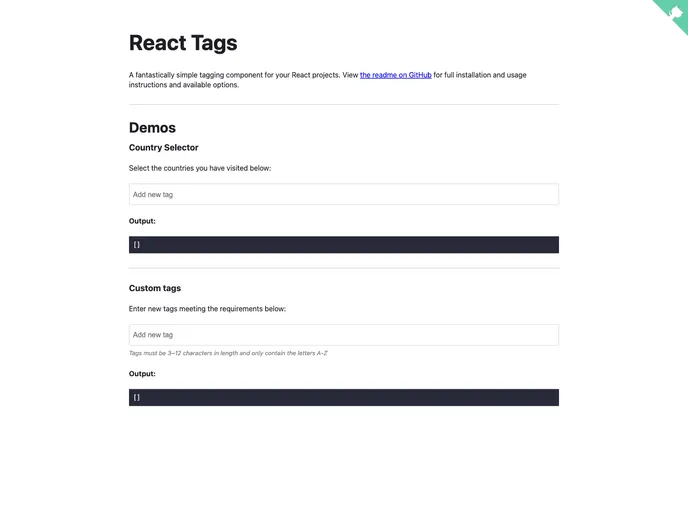

Legacy repo for the fantastically simple tagging component for your React projects (legacy repo)
Overview
React Tag Autocomplete is a user-friendly tagging component designed specifically for integration into React applications. Building upon the foundation laid by the React Tags project by Prakhar Srivastav, this streamlined version enhances accessibility by removing unnecessary drag-and-drop functionalities while adding appropriate ARIA roles and states. The introduction of a flexible, resizing text input makes the tagging experience even more seamless for users.
This component is ideal for developers looking for a straightforward solution to implement tagging features without the overhead of complex configurations. With key functionalities that cater to modern web accessibility standards, React Tag Autocomplete presents a robust tool for enhancing user interaction within forms or content management systems.
Features
-
Easy Integration: This component is designed to drop right into your existing React projects, making implementation quick and hassle-free.
-
Accessibility Enhanced: With proper ARIA roles and states integrated, this tagging component promotes an inclusive user experience for those relying on assistive technologies.
-
Resizing Input Field: The text input automatically adjusts its size based on the content entered, ensuring a clean and user-friendly interface.
-
Customizable Suggestions: You can provide an array of suggestions, and even filter them with customizable callback functions, helping users easily find and select relevant tags.
-
Support for New Tags: The component allows users to create and add new tags, fostering a more dynamic tagging experience.
-
Flexible Attributes: Options include placeholder text, aria-labels, and customizable text for buttons, allowing for a tailored user experience.
-
Handling No Suggestions: The component provides built-in messaging when there are no available suggestions, keeping users informed during their tagging process.
-
Automatic Resizing Option: This feature can be toggled to enable the text input to resize to fit the value, eliminating text overflow and enhancing the visual presentation.
- React
React is a widely used JavaScript library for building user interfaces and single-page applications. It follows a component-based architecture and uses a virtual DOM to efficiently update and render UI components
- Rollup

RollupJS is a popular and efficient JavaScript module bundler that takes the code from multiple modules and packages them into a single optimized file, minimizing the overall size of the application and improving its performance.