
Devpush


Like Vercel, but open source and for all languages.
Overview
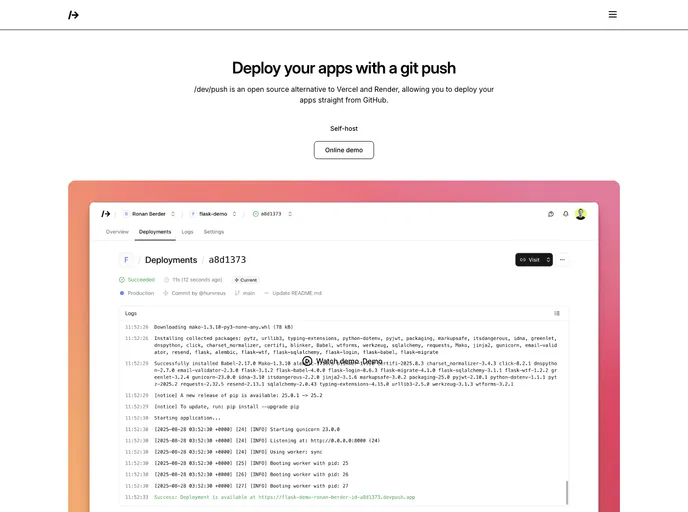
/dev/push is a powerful open-source platform designed as a self-hostable alternative to popular deployment services like Vercel, Render, and Netlify. It provides developers with the necessary tools to build and deploy applications in various programming languages, including Python, Node.js, and PHP. With its focus on reliability, it supports zero-downtime updates and offers a range of features that facilitate team collaboration and environment management.
What sets /dev/push apart is its ability to deliver real-time logs and customizable environments, making it easier for teams to manage their deployment processes effectively. With a user-friendly approach to Git-based deployments and robust security measures via role-based access controls, this platform is tailored for both individual developers and teams.
Features
- Git-based deployments: Effortlessly push to deploy from GitHub with seamless zero-downtime rollouts and instant rollback options.
- Multi-language support: Compatible with a variety of languages such as Python, Node.js, and PHP, offering flexibility for developers.
- Environment management: Easily manage multiple environments with branch mapping and ensure secure handling of environment variables.
- Real-time monitoring: Monitor your applications live with searchable build and runtime logs, enhancing debugging and performance tracking.
- Team collaboration: Implement role-based access control for team invitations and tailored permissions, fostering efficient teamwork.
- Custom domains: Effortlessly set up custom domains with automatic Let's Encrypt SSL certificate provisioning, ensuring secure connections.
- Self-hosted and open source: Enjoy full control over your deployment environment by running the solution on your own servers, all under the MIT license.
- Django
Django is a high-level Python web framework that encourages rapid development and clean, pragmatic design. It follows the model-view-controller (MVC) architectural pattern, providing an extensive set of built-in tools and conventions to streamline the creation of robust and scalable web applications.
- Flask
Flask is a lightweight and popular web framework for Python, known for its simplicity and flexibility. It is widely used to build web applications, providing a minimalistic approach to web development with features like routing, templates, and support for extensions.
- Next.js
Next.js is a React-based web framework that enables server-side rendering, static site generation, and other powerful features for building modern web applications.
- Vercel

Vercel offers built-in support for deploying and hosting Next.js applications, making it a popular choice among Next.js developers.