
Nuxtlog
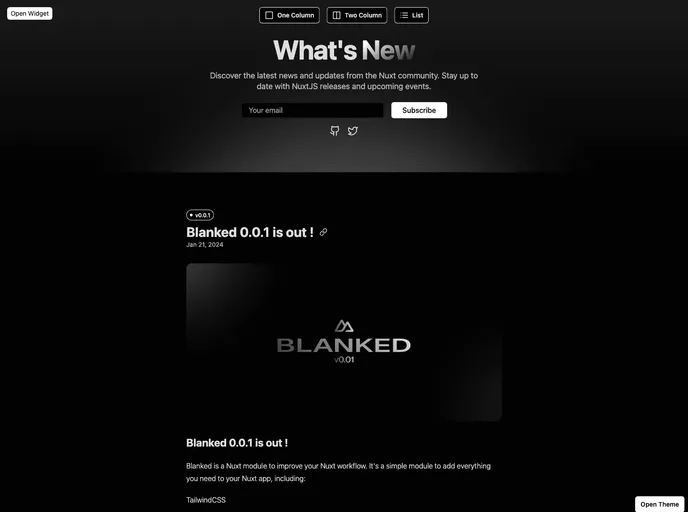



NuxtLog is a changelog, newsletter, etc... built with Nuxt
Overview:
NuxtLog is a lightweight, free, and open-source template for creating changelogs, newsletters, and other content for projects. It is powered by Nuxt Content and built with Vue, Nuxt, and Tailwindcss. NuxtLog offers a user-friendly interface and integrates a Resend Broadcast feature for sending content updates to users via email. It also supports multiple themes, code syntax highlighting, and various layout options.
Features:
- Nuxt Content Integration: Easily manage content using Nuxt Content.
- Resend Broadcast: Send content updates to users via email.
- Multi-theme Support: Choose from different themes for your content.
- Code Syntax Highlighting: Highlight code snippets in your content.
- Native Components: Includes features like badges, copying post URLs, and support for multiple authors.
- Layout Options: Supports various layout styles such as one column, two columns, lists, and social display.
- SEO Support: Auto-generate sitemap.xml for search engine optimization.
Summary:
NuxtLog is a versatile tool for creating and managing project changelogs and newsletters. With its integration of Nuxt Content, various layout options, theme support, and the Resend Broadcast feature, managing and sharing project updates becomes efficient and visually appealing. The inclusion of features like code syntax highlighting, SEO support, and native components further enhances the functionality of NuxtLog, making it a comprehensive solution for content management in Nuxt projects.
- Nuxt
nuxt.js is a lightweight and flexible JavaScript framework that allows developers to easily build dynamic and reactive user interfaces. Its intuitive syntax, modular architecture, and focus on performance make it a popular choice for modern web development.
- Vue
Vue.js is a lightweight and flexible JavaScript framework that allows developers to easily build dynamic and reactive user interfaces. Its intuitive syntax, modular architecture, and focus on performance make it a popular choice for modern web development.
- Tailwind
Tailwind CSS is a utility-first CSS framework that provides pre-defined classes for building responsive and customizable user interfaces.
- Templates & Themes

A template or theme refers to a pre-designed layout or structure that provides a basic framework for building a specific type of application or website. It typically includes good design, placeholder content and functional features, allowing developers to customize and fill in the details according to their specific needs.
- Eslint

ESLint is a linter for JavaScript that analyzes code to detect and report on potential problems and errors, as well as enforce consistent code style and best practices, helping developers to write cleaner, more maintainable code.