
Passkey Cloudflare
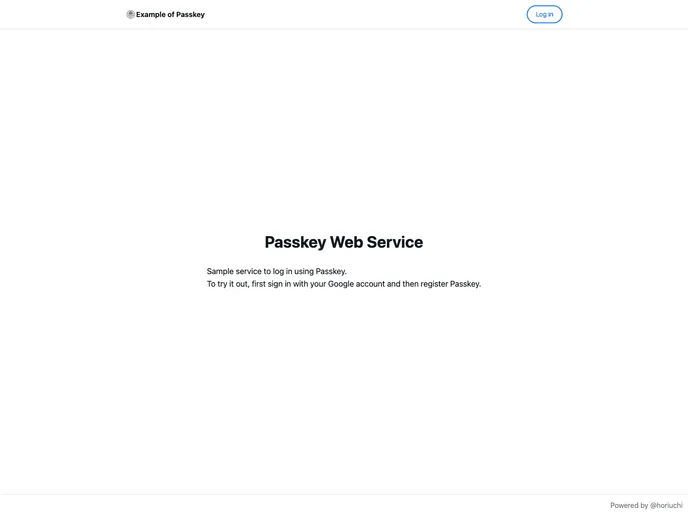




Example of running passkey on cloudflare
Overview
Passkey authentication is becoming an essential method for secure logins in the digital realm, and integrating it with Cloudflare Pages can enhance both security and user experience. This streamlined process not only allows users to log in easily through their GitHub accounts but also lays the groundwork for a robust application architecture using modern web technologies.
By following a few straightforward steps, users can set up their Cloudflare Pages and enjoy the benefits of passkey authentication, making their web applications more secure. Let’s explore some of the standout features that make this setup appealing.
Features
-
Easy Account Creation: Users can quickly create an account by logging in with their GitHub credentials, simplifying the onboarding process.
-
Passkey Integration: Once registered, users have the capability to log in securely using passkeys, enhancing security and convenience.
-
Cloudflare KV Namespace: The setup includes a Cloudflare KV namespace for session storage, ensuring that session management is both efficient and reliable.
-
Cloudflare D1 Database: Utilizing a Cloudflare D1 database allows for structured data handling, making it easier to manage user sessions and other data needs.
-
Seamless Development Workflow: The process includes initializing migration files and starting a development server, ensuring a smooth transition from development to production.
-
Deployment to Cloudflare Pages: With one-click deployment options, users can easily deploy their applications to Cloudflare Pages, minimizing downtime and improving accessibility.
-
Support for TypeScript and Remix: The integration supports modern technologies like TypeScript and the Remix framework, which appeals to developers looking to build dynamic web applications.
- React
React is a widely used JavaScript library for building user interfaces and single-page applications. It follows a component-based architecture and uses a virtual DOM to efficiently update and render UI components
- Remix
Remix is a modern JavaScript framework that focuses on building fast and performant web applications. It emphasizes a combination of server-rendered content and client-side interactivity, offering a robust architecture for creating scalable and maintainable projects.
- Tailwind
Tailwind CSS is a utility-first CSS framework that provides pre-defined classes for building responsive and customizable user interfaces.
- Drizzle ORM
Drizzle ORM is a TypeScript ORM for SQL databases designed with maximum type safety in mind. It comes with a drizzle-kit CLI companion for automatic SQL migrations generation. Drizzle ORM is meant to be a library, not a framework. It stays as an opt-in solution all the time at any levels.
- Eslint

ESLint is a linter for JavaScript that analyzes code to detect and report on potential problems and errors, as well as enforce consistent code style and best practices, helping developers to write cleaner, more maintainable code.
- Framer Motion

Alpine.js is a lightweight JavaScript framework that simplifies the process of creating dynamic, reactive user interfaces on the web. It uses a declarative syntax that offers a higher level of abstraction compared to vanilla JavaScript, while being more performant and easier to use than jQuery.
- Typescript

TypeScript is a superset of JavaScript, providing optional static typing, classes, interfaces, and other features that help developers write more maintainable and scalable code. TypeScript's static typing system can catch errors at compile-time, making it easier to build and maintain large applications.