
Angular UI Router Anim In Out
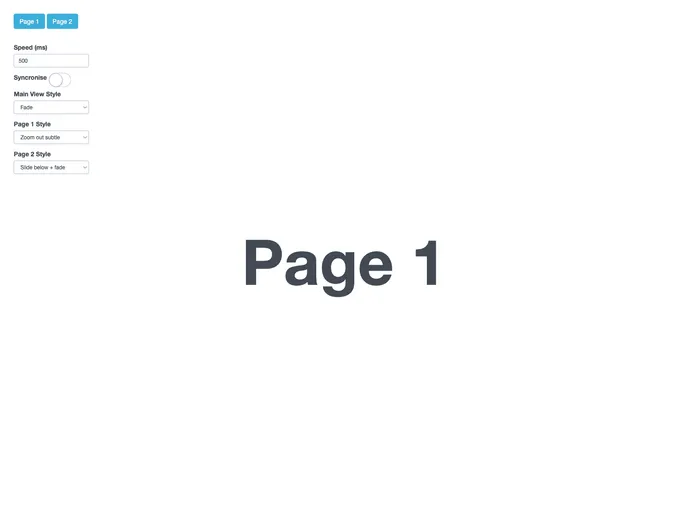

An animation directive to use with ngAnimate 1.2+ and ui-router
Overview
The Angular UI Router Anim In Out directive is a dynamic addition for developers looking to enhance their web applications with smooth animations during state transitions. By leveraging the combination of ngAnimate and ui-router, this directive allows for a more fluid user experience, particularly in single-page applications where navigating between views can often feel abrupt.
Setting it up is straightforward and flexible, ensuring that developers can easily integrate animations that align with their design preferences and application flow. Whether you're creating a simple transition effect or a complex animation sequence, this directive offers numerous options for customization.
Features
-
Easy Installation: Simply include the
anim-in-out.jsandanim-in-out.cssfiles in your project, and add the module as a dependency to start using it. -
Customizable Animations: The transition speed is set by default to 1000ms, but you can easily modify this using the
data-anim-speedattribute to suit your application’s needs. -
Flexibility with State Management: Add the
anim-in-outclass to yourui-viewelements to trigger animations, ensuring a seamless visual transition when users navigate between different views. -
Diverse Animation Options: Utilize various classes from the
anim-in-out.cssfile, such asanim-fadeoranim-slide-left, to achieve the desired effect during state changes. -
Control Over Timing: Customize transition timings further with
data-anim-in-speedanddata-anim-out-speedattributes for more granular control over the animation sequences. -
Easy Troubleshooting: The directive provides clear guidance on positioning issues that may arise due to sibling nodes being added to the DOM, helping developers maintain a consistent layout during transitions.
-
Additional Resources: Explore related tools like
angular-gsapify-routerfor advanced transition options powered by GSAP if you require more intricate animation control.
- Angular
Angular is a TypeScript-based open-source framework by Google for building dynamic single-page applications and cross-platform mobile apps with MVC architecture and a rich set of features.
- Gulp

Gulp.js is an old but popular site building tool that automates various repetitive development tasks in web development, such as compiling Sass, minifying JavaScript, and optimizing images.