
Template React Native Typescript


Minimal template with best practices and automation scripts for improved developer experience.
Overview
If you're venturing into the world of React Native development and looking for a streamlined way to kickstart your project, this React Native Template TypeScript is an excellent choice. Created with a comprehensive feature set, it allows developers to focus on building their applications rather than getting bogged down with setup and configuration. With built-in capabilities for API interactions and state management, this template is designed to make the bootstrapping process as efficient as possible.
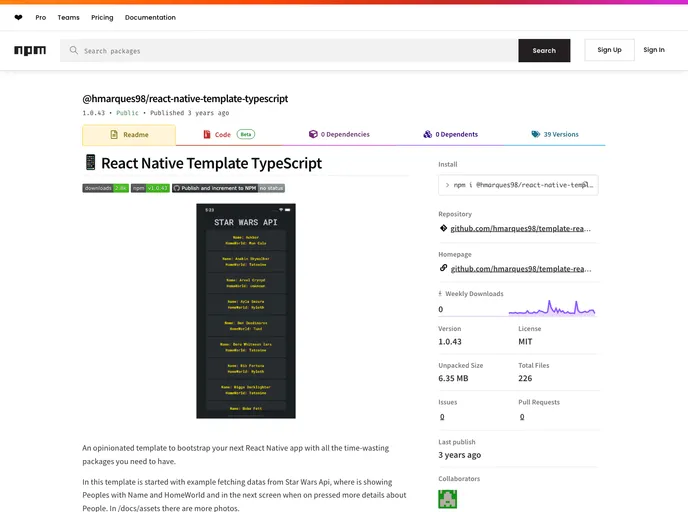
The template is not just an ordinary starter set; it includes practical examples and integrations that enhance productivity. For instance, it demonstrates fetching data from the Star Wars API, giving users insights about different characters and their home worlds. With additional tools at your disposal, you'll be set up for success in no time.
Features
- React Query: Simplifies and streamlines API requests, offering greater control and efficiency.
- CodePush Integration: Enables seamless over-the-air updates for JavaScript and images, keeping your app fresh without requiring full installs.
- Redux Toolkit: Provides a powerful and easy way to manage global state across your application.
- BootSplash: Offers quick and easy splash screen configurations to improve the user experience.
- Storybook: A dedicated UI component explorer for developing, documenting, and testing React Native components.
- Sentry: Built-in logging and error tracking for monitoring your app's performance in production.
- Detox and React Testing Library: Essential tools for automated testing, ensuring a robust and reliable application.
- React Navigation: Facilitates intuitive navigation and deep linking capabilities for a better user experience.
This template not only offers a strong foundation but also welcomes contributions, fostering a collaborative atmosphere for developers to enhance and evolve this resource.
- React
React is a widely used JavaScript library for building user interfaces and single-page applications. It follows a component-based architecture and uses a virtual DOM to efficiently update and render UI components
- React Native
React Native is a framework for building mobile applications using React and JavaScript. It enables developers to write once and deploy to multiple platforms, including iOS, Android, and the web, while providing a native app-like experience to users.
- Templates & Themes

A template or theme refers to a pre-designed layout or structure that provides a basic framework for building a specific type of application or website. It typically includes good design, placeholder content and functional features, allowing developers to customize and fill in the details according to their specific needs.
- Typescript

TypeScript is a superset of JavaScript, providing optional static typing, classes, interfaces, and other features that help developers write more maintainable and scalable code. TypeScript's static typing system can catch errors at compile-time, making it easier to build and maintain large applications.