
Hexo Renderer Less


Less renderer for Hexo.
Overview
The Less renderer is a powerful tool for developers looking to enhance their web projects with the benefits of Less CSS. By adding support for Less, it simplifies the process of styling websites and enables more efficient management of CSS styles. The renderer's integration into theme configurations allows developers to seamlessly include essential resources and customize their build processes.
Features
- Flexible Include Paths: Configure paths in your theme setup to include necessary resources like Bower Bootstrap, ensuring easy access to core styles.
- Globbing Support: Implement glob patterns for flexible file selection, allowing for the inclusion of multiple files in a single declaration.
- Customizable Options: Utilize Less.js options to tailor the rendering process according to project needs, optimizing performance and functionality.
- Seamless Integration: The renderer can be easily integrated into existing workflows, facilitating smooth transitions for developers familiar with Less.
- Enhanced Collaboration: The structured approach to managing Less files fosters better teamwork among developers, promoting consistency in style management.
- Streamlined Configuration: Simplified setup processes mean less time spent on configuration and more focus on design and development.
- Hexo
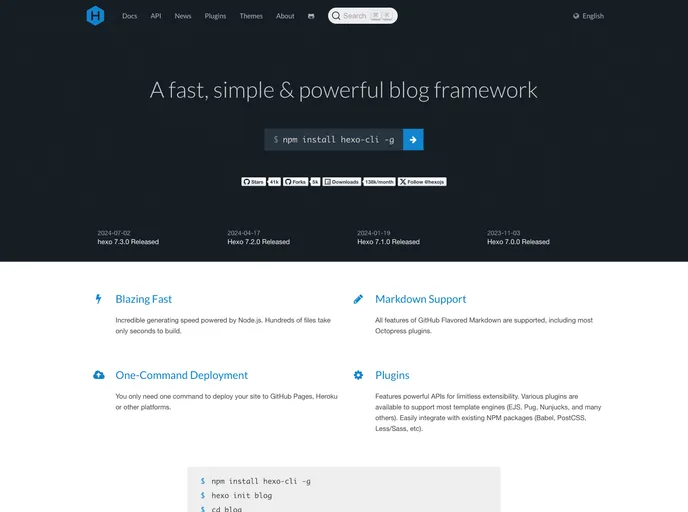
Hexo is a static site generator built with Node.js that enables developers to create fast and efficient websites using Markdown, EJS, and Stylus. It offers features such as server-side rendering, plugin support, and easy deployment to hosting services like GitHub Pages and Netlify.
- LESS
Less CSS is a dynamic stylesheet language that extends the capabilities of CSS, allowing developers to write cleaner, more modular, and reusable stylesheets with features like variables, mixins, and nested rules.
- Eslint

ESLint is a linter for JavaScript that analyzes code to detect and report on potential problems and errors, as well as enforce consistent code style and best practices, helping developers to write cleaner, more maintainable code.