
Next Landing Page Simple
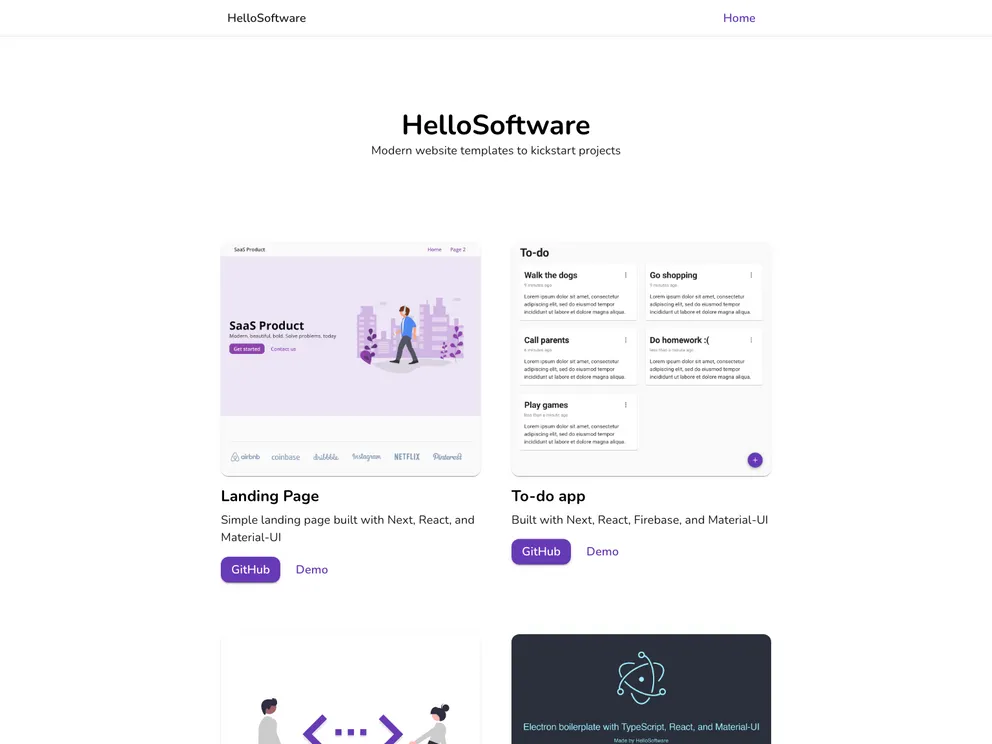


Simple landing page built with Next.js and Material-UI
Overview
The Simple Landing Page is a web application built using Next.js and Material-UI. It is a basic landing page template that developers can use as a starting point for their own projects. The application utilizes React.js, Next.js, and Material-UI as its major technologies. It also offers a seamless developer experience with TypeScript, ESLint, and Prettier. The project is open-source and is licensed under the MIT license.
Features
- Next.js: The application is built using Next.js, a popular React framework, which provides server-side rendering and other advanced features for a better user experience.
- Material-UI: The landing page is styled using Material-UI, a UI component library that offers a rich set of pre-designed components and themes for rapid development.
- Developer Experience: The project offers a seamless developer experience with the use of TypeScript for type checking, ESLint for linting, and Prettier for code formatting.
Summary
The Simple Landing Page is a basic landing page template built using Next.js and Material-UI. It offers a seamless developer experience with TypeScript, ESLint, and Prettier. To install the application, clone the repository, install the dependencies, and run it locally using npm run dev. The project is open-source and is licensed under the MIT license.
- Next.js
Next.js is a React-based web framework that enables server-side rendering, static site generation, and other powerful features for building modern web applications.
- React
React is a widely used JavaScript library for building user interfaces and single-page applications. It follows a component-based architecture and uses a virtual DOM to efficiently update and render UI components
- Material UI
material-ui adds classes to Tailwind CSS for all common UI components. Classes like btn, card, etc. This allows us to focus on important things instead of making basic elements for every project.
- Landing Page

A landing page is a standalone web page designed to promote a specific product, service, or offer. Landing pages are used in marketing campaigns to drive conversions and increase revenue, and typically include a clear call to action, minimal distractions, and a focus on the benefits of the product or service.
- Templates & Themes

A template or theme refers to a pre-designed layout or structure that provides a basic framework for building a specific type of application or website. It typically includes good design, placeholder content and functional features, allowing developers to customize and fill in the details according to their specific needs.
- Eslint

ESLint is a linter for JavaScript that analyzes code to detect and report on potential problems and errors, as well as enforce consistent code style and best practices, helping developers to write cleaner, more maintainable code.
- Typescript

TypeScript is a superset of JavaScript, providing optional static typing, classes, interfaces, and other features that help developers write more maintainable and scalable code. TypeScript's static typing system can catch errors at compile-time, making it easier to build and maintain large applications.