
Hexo Photoswipe
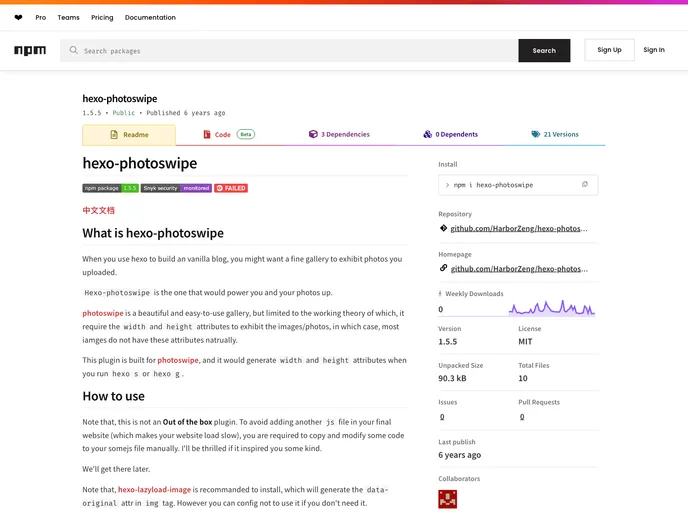

a fine gallery to exhibit photos in vanilla hexo blog
Overview
Hexo-photoswipe is a plugin designed to enhance photo galleries on Hexo-based blogs, providing a visually appealing way to showcase images. However, its functionality comes with certain prerequisites that might deter potential users. The plugin relies on the image width and height attributes, which must be manually calculated, a process that can be time-consuming and requires a fair amount of JavaScript knowledge.
As a result, while hexo-photoswipe has the potential to elevate the quality of photo presentations, its implementation may present challenges for those who are not well-versed in coding. This review explores its key features and considerations for anyone looking to integrate this plugin into their Hexo blog.
Features
-
Image Size Calculation: Requires the width and height attributes for images, which can be burdensome as they need to be calculated manually.
-
Gallery Aesthetics: Offers a visually appealing interface that enhances the presentation of uploaded photos, making galleries more attractive.
-
Installation Complexity: Not a plug-and-play solution; entails copying and modifying code within JavaScript files, which can deter non-technical users.
-
Lazy Load Compatibility: Works well with the hexo-lazyload-image plugin, which generates data attributes for improved loading performance.
-
Multiple Image Sources: Supports both local images stored in the project and online images, with a method for caching remote images to calculate dimensions.
-
Configuration Options: Allows users to configure loading behavior and image processing through the
_config.ymlfile for customized usage. -
Community Support: Encourages users to engage with the community through GitHub for support and additional guidance on using the plugin effectively.
- Hexo
Hexo is a static site generator built with Node.js that enables developers to create fast and efficient websites using Markdown, EJS, and Stylus. It offers features such as server-side rendering, plugin support, and easy deployment to hosting services like GitHub Pages and Netlify.
- Blog

Blog websites feature posts written by one or more authors, organized by categories and tags, with a section for comments and archives sorted by date or topic. Additional features may include search bar, social media sharing, subscription or RSS feed, about and contact pages, and visual content.