
Tailwindcss Image Rendering
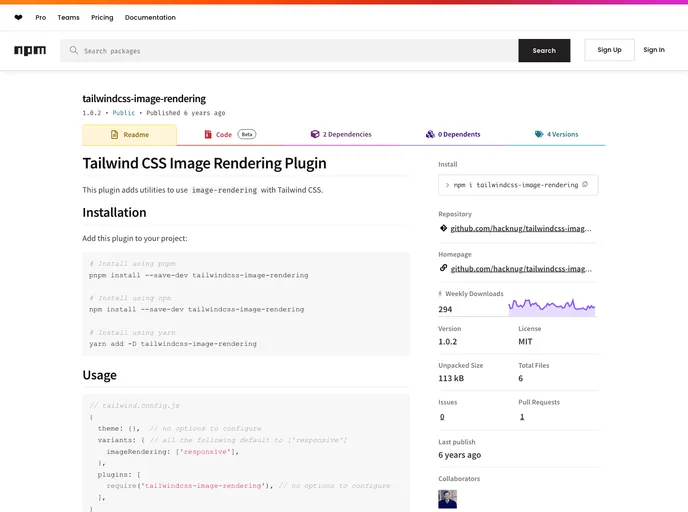

Image-rendering utilities for Tailwind CSS.
## Overview
Tailwind CSS is known for its utility-first approach, making it easy for developers to create sleek and modern web interfaces. The Tailwind CSS Image Rendering utilities provide a set of predefined classes that help optimize how images are displayed across different browsers. Whether you're looking to prioritize speed, quality, or both, these utilities give you the flexibility to create visually appealing web applications.

With the use of Tailwind CSS Image Rendering, developers can leverage efficient image rendering techniques without compromising the quality of their visuals. This feature not only enhances the look of a website but also improves its performance by ensuring that images are rendered optimally.

## Features
- **Flexible Image Rendering:** Easily switch between different rendering modes such as auto, crisp-edges, or pixelated to achieve the desired visual effect.
- **Utility Classes:** Utilizes predefined utility classes that save time and streamline the styling process for images.
- **Responsive Design:** Ensures consistent image display across various screen sizes and devices, enhancing user experience.
- **Performance Optimization:** Helps in loading images more efficiently, contributing to faster page loads and better website performance.
- **Compatibility:** Works seamlessly with other Tailwind CSS components, making it a perfect addition to any Tailwind project.
- **Customizability:** Allows for easy modification and adaptation to suit specific design needs or branding guidelines.
- Tailwind
Tailwind CSS is a utility-first CSS framework that provides pre-defined classes for building responsive and customizable user interfaces.
- Postcss

PostCSS is a popular open-source tool that enables web developers to transform CSS styles with JavaScript plugins. It allows for efficient processing of CSS styles, from applying vendor prefixes to improving browser compatibility, ultimately resulting in cleaner, faster, and more maintainable code.