
Nextjs Seo Blog Starter
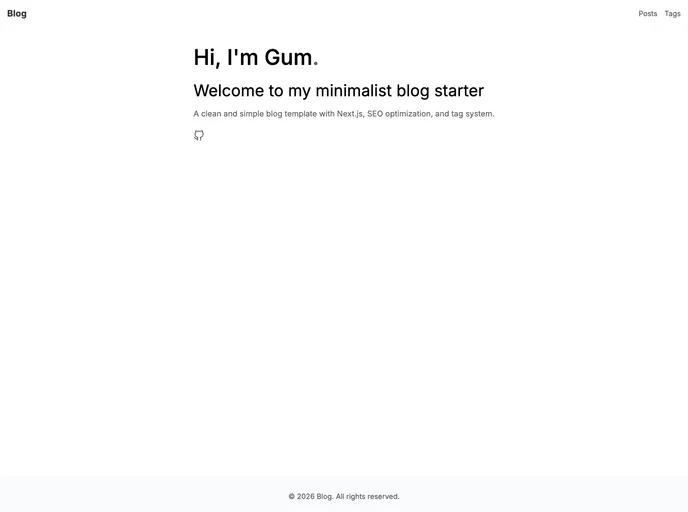


A Next.js 14 blog template with TypeScript and Tailwind CSS. Includes proper SEO setup, structured data, social sharing tags, Markdown support, tagging system, and responsive design. Ready to deploy on Vercel.
Overview
If you're looking to launch a blog with a modern touch and excellent performance, the Next.js SEO Blog Starter might be just what you need. Built on Next.js 14 and TypeScript, this starter kit offers a clean and customizable framework for bloggers who want to focus on content without worrying about the technical setup. Its seamless deployment with Vercel further simplifies the process, making it an attractive choice for developers and content creators alike.
With a responsive design and a variety of built-in features, this blogging starter not only looks great but also ensures your posts can reach a wider audience. Whether you’re a seasoned developer or just starting out, this boilerplate provides all the essential tools to get your blog up and running swiftly.
Features
- Built on Next.js 14: Utilizes the latest features of Next.js, including the App Router for enhanced routing capabilities.
- SEO Optimization: Comes with pre-configured SEO metadata and OpenGraph tags to help your blog rank better in search engines.
- Responsive Design: Designed with Tailwind CSS for a mobile-friendly experience, ensuring your blog looks great on any device.
- Markdown Support: Create engaging posts easily by writing in Markdown, which is perfect for content-heavy websites.
- Tag System: Organize your content efficiently with a tagging system that enhances user navigation through your blog.
- Custom 404 Page: Provides a cleanly designed custom 404 page to ensure a professional user experience even when content is not found.
- Analytics Ready: Built-in support for analytics allows you to track your blog’s performance and understand your audience better.
- Easy Customization: Tailor the look and feel of your blog by editing configuration files for styles and themes.
- Next.js
Next.js is a React-based web framework that enables server-side rendering, static site generation, and other powerful features for building modern web applications.
- React
React is a widely used JavaScript library for building user interfaces and single-page applications. It follows a component-based architecture and uses a virtual DOM to efficiently update and render UI components
- Tailwind
Tailwind CSS is a utility-first CSS framework that provides pre-defined classes for building responsive and customizable user interfaces.
- Blog

Blog websites feature posts written by one or more authors, organized by categories and tags, with a section for comments and archives sorted by date or topic. Additional features may include search bar, social media sharing, subscription or RSS feed, about and contact pages, and visual content.
- Eslint

ESLint is a linter for JavaScript that analyzes code to detect and report on potential problems and errors, as well as enforce consistent code style and best practices, helping developers to write cleaner, more maintainable code.
- MDX

MDX is a format that allows developers to write JSX within Markdown documents, combining the power of React with the simplicity of Markdown. This allows for the creation of dynamic and interactive content that can be easily shared and consumed across different platforms and devices.
- Postcss

PostCSS is a popular open-source tool that enables web developers to transform CSS styles with JavaScript plugins. It allows for efficient processing of CSS styles, from applying vendor prefixes to improving browser compatibility, ultimately resulting in cleaner, faster, and more maintainable code.
- Typescript

TypeScript is a superset of JavaScript, providing optional static typing, classes, interfaces, and other features that help developers write more maintainable and scalable code. TypeScript's static typing system can catch errors at compile-time, making it easier to build and maintain large applications.