
Dashboard Nextjs
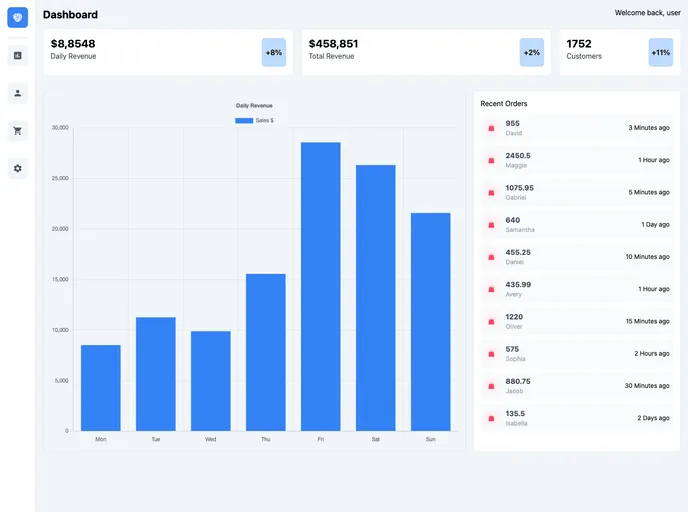


Responsive Dashboard with Next.Js, Charts.Js, TailwindCss
Overview
The combination of Next.js and Tailwind CSS creates a powerful environment for building modern and responsive dashboards. With its server-side rendering capabilities, Next.js enhances performance and SEO, while Tailwind CSS facilitates styling with utility-first classes, making the design process intuitive and efficient. Integrating Chart.js allows for the creation of dynamic and interactive charts, providing insightful data visualization that adds real value to any dashboard.
This stack not only streamlines the development process but also ensures that the final application is sleek, functional, and easy to maintain. Utilizing Prettier for code formatting further enhances code readability and consistency, making collaboration easier.
Features
- Server-Side Rendering with Next.js: Gain improved performance and SEO benefits, ensuring your dashboard loads quickly and ranks well on search engines.
- Utility-First Styling with Tailwind CSS: Easily create responsive designs using utility classes that simplify the styling process and allow for rapid prototyping.
- Dynamic Data Visualization with Chart.js: Integrate interactive charts that dynamically represent data, enhancing user engagement and insight.
- Automated Code Formatting with Prettier: Maintain consistent code style across your project, streamlining collaboration among team members and preventing style-related issues.
- Highly Customizable Components: Customize your dashboard layout and components effortlessly to match your specific needs, providing a tailored experience to users.
- Modern Development Experience: Enjoy a seamless development process due to the integration of robust tools and libraries, making it easier to build, test, and deploy applications.
- Easy Deployment Options: Simplify the deployment of your dashboard, ensuring that updates and changes can be managed smoothly.
- Next.js
Next.js is a React-based web framework that enables server-side rendering, static site generation, and other powerful features for building modern web applications.
- React
React is a widely used JavaScript library for building user interfaces and single-page applications. It follows a component-based architecture and uses a virtual DOM to efficiently update and render UI components
- Tailwind
Tailwind CSS is a utility-first CSS framework that provides pre-defined classes for building responsive and customizable user interfaces.
- Dashboard

A dashboard style website template is a pre-designed layout that features a user interface resembling a control panel or dashboard. It typically includes charts, graphs, tables, and other data visualization tools that allow users to monitor and analyze data in real-time.
- Postcss

PostCSS is a popular open-source tool that enables web developers to transform CSS styles with JavaScript plugins. It allows for efficient processing of CSS styles, from applying vendor prefixes to improving browser compatibility, ultimately resulting in cleaner, faster, and more maintainable code.