
Vue Strapi


Strapi plugin for Vue.js
Overview
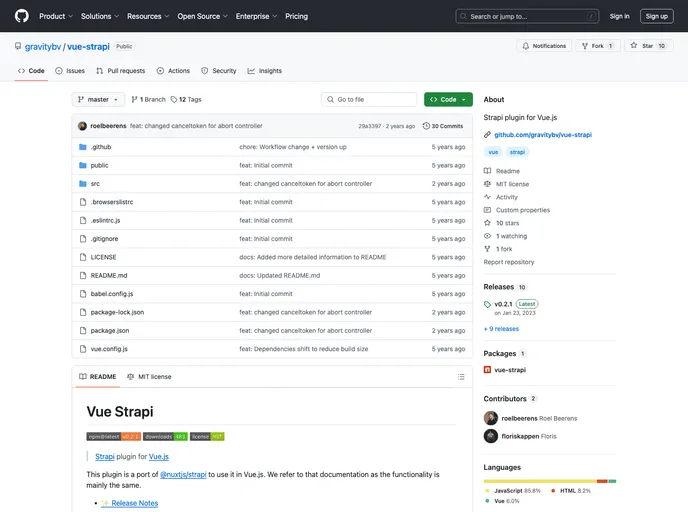
Vue Strap is a Strapi plugin for Vue.js that allows developers to use Strapi functionality in their Vue.js projects. This plugin is a port of @nuxtjs/strapi and offers authentication support, RESTful methods, an adaptive SDK for API entities, and error handling with hooks. Developers can easily install and configure Vue Strap in their projects using npm.
Features
- Authentication support: Vue Strap offers authentication support, allowing developers to implement users authentication functionality in their Vue.js projects.
- RESTful methods: The plugin provides RESTful methods that enable developers to interact with Strapi API entities easily.
- Adaptive SDK for API entities: With Vue Strap, developers can benefit from an adaptive SDK that simplifies the process of working with API entities in their Vue.js projects.
- Handle errors with hooks: The plugin offers hooks for handling errors, making it easier for developers to manage errors in their Vue.js projects.
Summary
Vue Strap is a Strapi plugin for Vue.js that provides developers with easy access to Strapi functionality in their Vue.js projects. It offers features such as authentication support, RESTful methods, an adaptive SDK for API entities, and error handling with hooks. Developers can install and configure Vue Strap using npm, making it a convenient choice for integrating Strapi into Vue.js projects.
- Vue
Vue.js is a lightweight and flexible JavaScript framework that allows developers to easily build dynamic and reactive user interfaces. Its intuitive syntax, modular architecture, and focus on performance make it a popular choice for modern web development.
- Strapi
Strapi is an open source headless CMS that provides a customizable content management system and API for your projects. It allows you to manage content in a visual interface and use a REST or GraphQL API to retrieve the data.
- Eslint

ESLint is a linter for JavaScript that analyzes code to detect and report on potential problems and errors, as well as enforce consistent code style and best practices, helping developers to write cleaner, more maintainable code.