
Grandnode
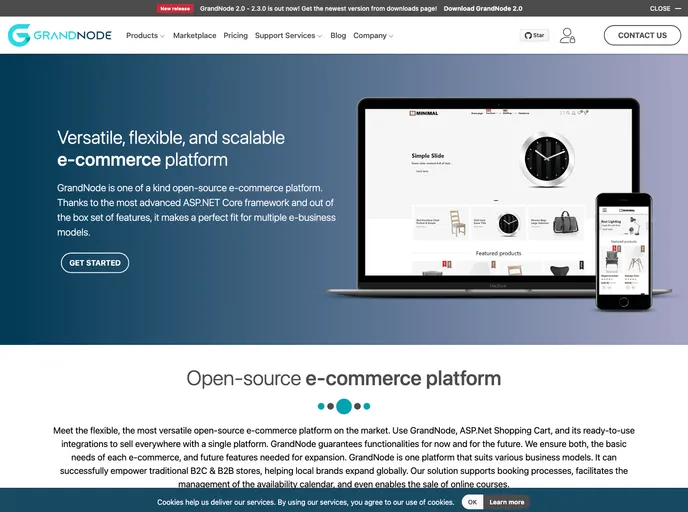
Open source, headless, multi-tenant eCommerce platform built with .NET Core, MongoDB, AWS DocumentDB, Azure CosmosDB, Vue.js.
Overview
GrandNode is an impressive e-commerce platform that stands out for its modern architecture and flexibility. While the repository includes a legacy version, it's essential to understand that the focus has shifted to GrandNode v2, an improved and fully developed version based on .NET Core 5.0 and MongoDB. This transition promises a wealth of new features and advancements, making it a more robust choice for developers and businesses alike.
Embracing open-source principles, GrandNode v2 is designed to cater to a wide range of e-commerce needs while ensuring that developers can seamlessly customize and extend the platform. As the legacy version is no longer actively maintained, users are encouraged to explore the latest offerings to take full advantage of the enhancements provided in the current version.
Features
- Modern Architecture: Built on .NET Core 5.0 and MongoDB, ensuring a powerful, scalable, and high-performance platform.
- Open-Source Flexibility: The platform is open-source, allowing developers to easily customize and enhance the software to meet their specific needs.
- Active Development: Focused resources on GrandNode v2 facilitate ongoing improvements and new feature rollouts, fostering a thriving community of developers.
- Comprehensive Support: While the legacy version has limited support, the emphasis on v2 means users can benefit from up-to-date troubleshooting and guidance.
- Enhanced User Experience: The latest version emphasizes user interface improvements, making the shopping experience more intuitive and engaging for customers.
- Secure and Reliable: Built with modern security practices, GrandNode ensures that e-commerce transactions are safe and trustworthy.
- Rich Functionality: GrandNode v2 offers a plethora of features out-of-the-box, including payment integrations, shipping options, and inventory management, all designed to streamline e-commerce operations.
- Ecommerce

Ecommerce websites sell products or services to customers through an online storefront. These websites typically include features such as product listings, shopping carts, payment processing, and order management tools.
- Docker

A website that uses Docker for containerization to streamline development, testing, and deployment workflows. This includes features such as containerization of dependencies, automated builds and deployments, and container orchestration to ensure scalability and availability.