
Navigation

Scene-Based Navigation for React and React Native
Overview
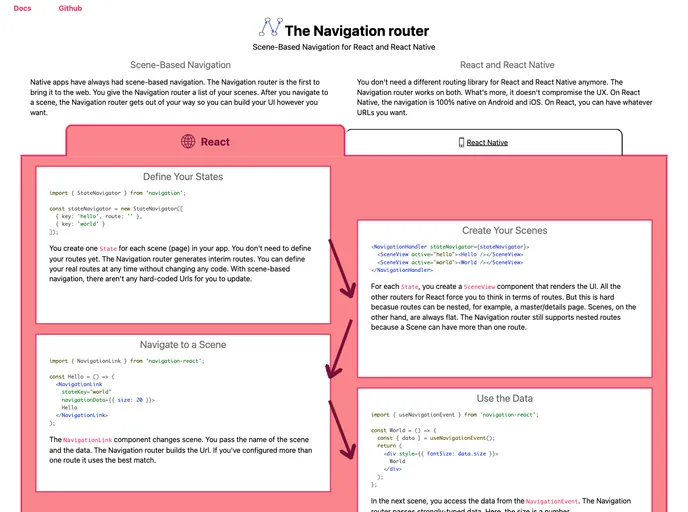
The Navigation router introduces an innovative solution for scene-based navigation tailored for both React and React Native applications. By allowing developers to define a series of scenes that shape the user interface, the Navigation router simplifies the navigation process without the constraints often imposed by traditional routing libraries. This seamless integration reflects a fundamental shift towards a more manageable and intuitive approach to navigation in web and mobile applications alike.
With the Navigation router, you can effectively create a fluid user experience on multiple platforms without worrying about compromising the user interface. The flexibility it offers, combined with its native-like performance, makes it a compelling option for developers looking to streamline their navigation processes and enhance the overall user experience.
Features
-
Unified Routing: No need for separate routing libraries for React and React Native, streamlining development processes across platforms.
-
Scene-Based Navigation: Focuses on scenes instead of routes, making it easier to manage navigation without dealing with complex nested routing issues.
-
Dynamic State Management: Automatically generates interim routes and allows for real routes to be defined as needed, reducing the burden of hard-coded URLs.
-
Native Performance: Provides 100% native navigation for both Android and iOS within React Native, ensuring a high-quality user experience.
-
Strongly-Typed Data: Facilitates strong data handling by passing data through the NavigationContext, enhancing type safety in the application.
-
Breadcrumb Trail Tracking: Optionally tracks the navigation history like a breadcrumb trail, which can enhance user orientation within applications.
-
Tailored UI Components: Offers components like SceneView and TabBar that render to native primitives, maintaining consistency with other native applications.
-
Easy Testing: Simple installation and testing process through npm, allowing developers to quickly validate their application setups.
- React
React is a widely used JavaScript library for building user interfaces and single-page applications. It follows a component-based architecture and uses a virtual DOM to efficiently update and render UI components
- Gulp

Gulp.js is an old but popular site building tool that automates various repetitive development tasks in web development, such as compiling Sass, minifying JavaScript, and optimizing images.
- Rollup

RollupJS is a popular and efficient JavaScript module bundler that takes the code from multiple modules and packages them into a single optimized file, minimizing the overall size of the application and improving its performance.
- Typescript

TypeScript is a superset of JavaScript, providing optional static typing, classes, interfaces, and other features that help developers write more maintainable and scalable code. TypeScript's static typing system can catch errors at compile-time, making it easier to build and maintain large applications.