
Grafana Infinity Datasource
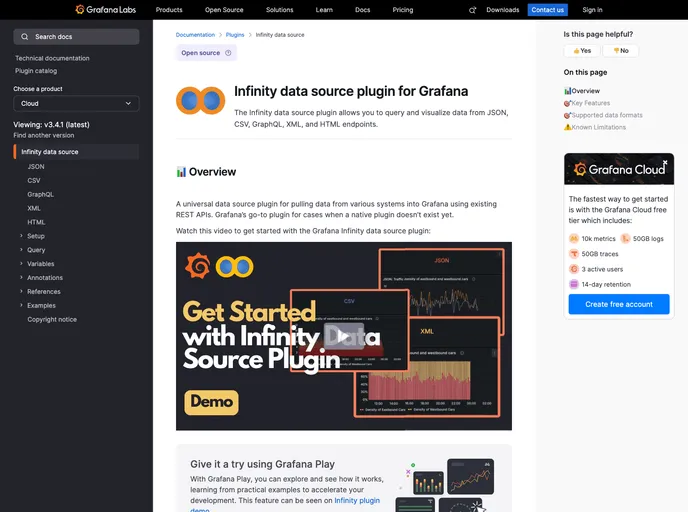


CSV, JSON, GraphQL, XML and HTML datasource for grafana.
Overview
Grafana Infinity Datasource is a powerful tool designed to enhance data visualization capabilities by allowing users to retrieve and display data from various formats such as JSON, CSV, XML, GraphQL, and HTML endpoints. This flexibility makes it an excellent choice for those who need to integrate diverse data sources into their Grafana dashboards, providing a seamless and efficient experience for analysts and developers alike.
With its user-friendly interface and solid documentation, users can easily navigate through setup and usage processes. However, it's important to note some limitations, particularly regarding backend features, which are contingent upon specific configurations.
Features
-
Multiple Data Source Support: Integrate data from JSON, CSV, XML, GraphQL, and HTML, bringing diverse datasets together for comprehensive analysis.
-
User-Friendly Documentation: Access a wealth of detailed documentation and examples that guide users on how to effectively utilize the plugin.
-
Interactive Demo Video: A demo video is available to help users visually understand the capabilities and functionality of the datasource.
-
Backend Features: Utilize advanced features such as alerting and recorded queries, although these require specific parser options to be enabled for full functionality.
-
Enterprise Ready: Support for enterprise features like query caching ensures that businesses can scale their data visualization needs without sacrificing performance.
-
Public Dashboards: Users can share insights easily; however, public dashboard functionality is limited to backend parser settings for optimal performance.
Overall, Grafana Infinity Datasource opens up a range of possibilities for visualization and data analysis, making it a valuable addition to the Grafana ecosystem.
- React
React is a widely used JavaScript library for building user interfaces and single-page applications. It follows a component-based architecture and uses a virtual DOM to efficiently update and render UI components
- SCSS
SCSS is a preprocessor scripting language that extends the capabilities of CSS by adding features such as variables, nesting, and mixins. It allows developers to write more efficient and maintainable CSS code, and helps to streamline the development process by reducing repetition and increasing reusability.
- Eslint

ESLint is a linter for JavaScript that analyzes code to detect and report on potential problems and errors, as well as enforce consistent code style and best practices, helping developers to write cleaner, more maintainable code.
- Graphql
A website that uses GraphQL as a query language to manage data fetching and state management. This includes features such as a strongly typed schema, client-side caching, and declarative data fetching to streamline data management and optimize website performance.
- Typescript

TypeScript is a superset of JavaScript, providing optional static typing, classes, interfaces, and other features that help developers write more maintainable and scalable code. TypeScript's static typing system can catch errors at compile-time, making it easier to build and maintain large applications.
- Webpack

Webpack is a popular open-source module bundler for JavaScript applications that bundles and optimizes the code and its dependencies for production-ready deployment. It can also be used to transform other types of assets such as CSS, images, and fonts.