
Gemini Image Editing Nextjs Quickstart
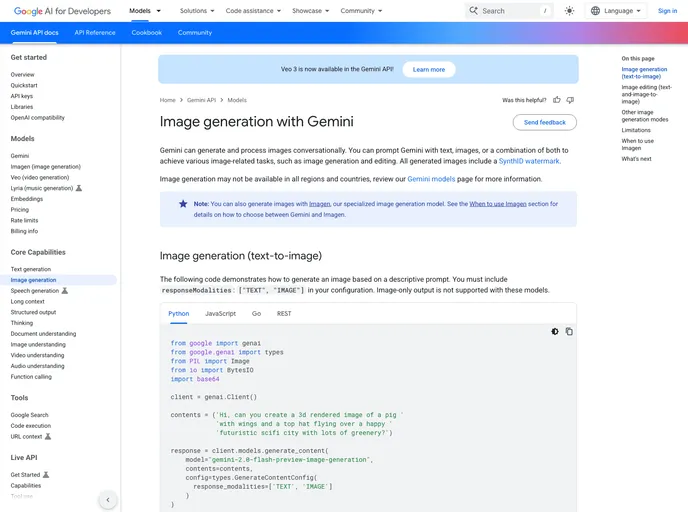


Get started with native image generation and editing using Gemini 2.0 and Next.js
Overview
Gemini 2.0 Flash is a revolutionary tool that simplifies the process of generating and editing images through intuitive text prompts and natural language instructions. By leveraging advanced AI capabilities, it allows users to create stunning visuals from simple text input or modify existing images effortlessly, offering a seamless experience for both novice and experienced creators. With its conversation context feature, users can refine their images iteratively, enhancing creativity and precision in the final outcome.
The user interface is designed with responsiveness in mind, built using Next.js, making it not just powerful but also user-friendly. Whether you are looking to generate unique images or edit them on-the-fly, Gemini 2.0 Flash is positioned to meet your every need while simplifying complex image generation tasks.
Features
- Text-to-Image Generation: Quickly generate vibrant images from descriptive text prompts using Gemini 2.0 Flash.
- Image Editing: Upload existing images and provide natural language instructions to modify them easily.
- Conversation History: Maintain context throughout the interaction for iterative refinements, allowing for dynamic adjustments and creative exploration.
- Responsive UI: The platform is built with Next.js and shadcn/ui, ensuring a smooth and adaptable user experience across devices.
- Seamless Workflow: Transition effortlessly between image creation and editing modes to fit your project needs.
- Gemini 2.0 Flash Javascript SDK: Develop with ease by utilizing the powerful SDK for integrating image generation and editing capabilities into your projects.
- Next.js
Next.js is a React-based web framework that enables server-side rendering, static site generation, and other powerful features for building modern web applications.
- React
React is a widely used JavaScript library for building user interfaces and single-page applications. It follows a component-based architecture and uses a virtual DOM to efficiently update and render UI components
- Tailwind
Tailwind CSS is a utility-first CSS framework that provides pre-defined classes for building responsive and customizable user interfaces.
- Eslint

ESLint is a linter for JavaScript that analyzes code to detect and report on potential problems and errors, as well as enforce consistent code style and best practices, helping developers to write cleaner, more maintainable code.
- Postcss

PostCSS is a popular open-source tool that enables web developers to transform CSS styles with JavaScript plugins. It allows for efficient processing of CSS styles, from applying vendor prefixes to improving browser compatibility, ultimately resulting in cleaner, faster, and more maintainable code.
- Typescript

TypeScript is a superset of JavaScript, providing optional static typing, classes, interfaces, and other features that help developers write more maintainable and scalable code. TypeScript's static typing system can catch errors at compile-time, making it easier to build and maintain large applications.