
Gitbook
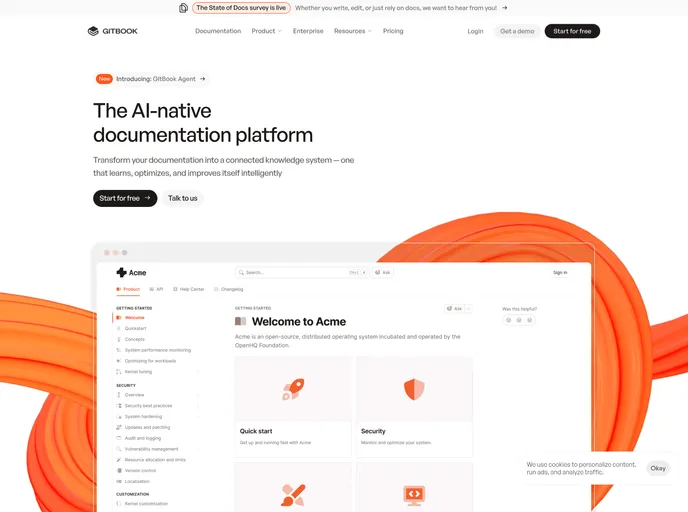
The open source frontend for GitBook doc sites
Overview
GitBook is a powerful tool designed for documenting technical knowledge, built on top of Next.js. It enables users to create and share detailed documents in a structured format, making it easier for teams and individuals to collaborate. Whether you’re a developer looking to contribute or simply want to utilize its rendering engine, GitBook provides a conducive environment for both seasoned contributors and newcomers alike.
By leveraging modern technologies and emphasizing open-source contributions, GitBook not only encourages collaborative efforts but also maintains a strong commitment to quality through rigorous testing and community participation. This ensures that both the application and its supporting ecosystem continue to evolve and meet user needs efficiently.
Features
-
Open Source: GitBook’s rendering engine is built on Next.js, allowing developers to contribute and customize the experience according to their requirements.
-
Easy Setup: Users can quickly get started by cloning the repository and installing dependencies, with clear instructions provided for local development.
-
Contribution Guidelines: A well-defined contributing guide helps new and experienced developers alike navigate the process of submitting pull requests and making impactful changes.
-
Multiple Language Support: The platform supports translations, encouraging contributions from users around the world to enhance accessibility and usability.
-
Testing and Quality Assurance: All pull requests undergo visual and performance testing to ensure that new changes do not introduce regressions, maintaining the integrity of the application.
-
Self-Hosting Capabilities: While users can choose to self-host the project, it's advised only for those who can manage the associated responsibilities and maintenance.
-
Integration with Modern Tools: GitBook makes use of modern tools like Node.js and Bun to enhance performance and streamline local development processes.
-
Community Engagement: The collaborative nature of GitBook invites users to report bugs and suggest features, fostering a supportive environment for ongoing improvement.
- Documentation

Documentation themes are built specifically for writing technical and product documentation. They are normally written and maintained in Markdown. The often include a navigation menu, search bar, clear headings, semantic document structure and clean typography.
- Vercel

Vercel offers built-in support for deploying and hosting Next.js applications, making it a popular choice among Next.js developers.