
Lovelace Material Components
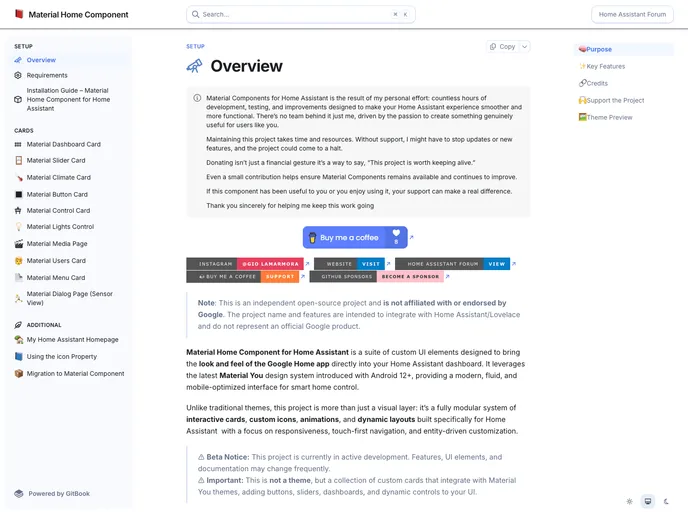

Material Home Component is a custom Home Assistant plugin that displays interactive cards for your devices. It shows real-time status (e.g., playing, idle), current media information, and allows quick control like play/pause, volume adjustment, and more — all styled with a modern, dynamic UI.
Overview
The Material Home Component for Home Assistant brings a fresh and modern aesthetic to your smart home management. This suite of custom cards adopts the Material You design principles, seamlessly integrating the sleek Google Home app experience into your Home Assistant setup. With a wide range of components, it enhances both functionality and visual appeal, making home automation more user-friendly and enjoyable.
From creating interactive dashboards to implementing responsive controls for your various smart devices, this toolset helps you customize your home experience to your liking. Whether you're a seasoned Home Assistant user or a newcomer, the organization and clarity of the Material Home Component makes managing your smart home easier than ever.
Features
- Material Dashboard Card: Offers a clean and intuitive layout for monitoring home activities and statuses.
- Material Button Card: Provides a visually appealing way to control devices with a single tap.
- Material Slider Card: Allows users to adjust settings or controls smoothly, perfect for managing volume or brightness.
- Material Climate: Displays and manages climate control settings, ensuring comfort throughout your home.
- Material Control: A versatile card that enables you to manage multiple device types conveniently.
- Material Lights: Customize and control your lighting setup with enhanced visual feedback and intuitive design.
- Material Dialog Page (Sensor View): A sleek interface for viewing and interacting with sensor data in real time.
The Material Home Component not only enriches the user experience but also ensures that managing your smart devices feels effortless and enjoyable.
- Material UI
material-ui adds classes to Tailwind CSS for all common UI components. Classes like btn, card, etc. This allows us to focus on important things instead of making basic elements for every project.
- Eslint

ESLint is a linter for JavaScript that analyzes code to detect and report on potential problems and errors, as well as enforce consistent code style and best practices, helping developers to write cleaner, more maintainable code.
- Rollup

RollupJS is a popular and efficient JavaScript module bundler that takes the code from multiple modules and packages them into a single optimized file, minimizing the overall size of the application and improving its performance.
- Typescript

TypeScript is a superset of JavaScript, providing optional static typing, classes, interfaces, and other features that help developers write more maintainable and scalable code. TypeScript's static typing system can catch errors at compile-time, making it easier to build and maintain large applications.