
Django Widgy
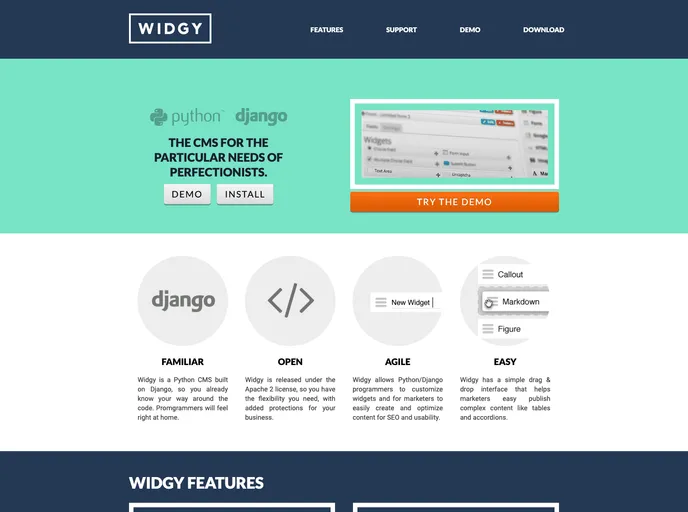
A CMS framework for Django built on a heterogenous tree editor.
Overview
Django Widgy is an innovative content management system (CMS) framework designed specifically for Django developers. Its unique heterogenous tree editor allows for an adaptable and user-friendly content structure, which is ideal for creating complex website layouts with ease. Whether you're building a small personal blog or a large enterprise site, Django Widgy provides the tools necessary to streamline the process and enhance your productivity.
This framework is crafted to accommodate various content types and structures, making it a versatile choice for developers looking to take their projects to the next level. With Django Widgy, you can manage your site’s content intuitively, ensuring that even intricate designs can be manipulated effortlessly.
Features
-
Heterogenous Tree Editor: This feature allows users to manage diverse content types and structures in a cohesive and organized manner, enhancing flexibility in content presentation.
-
Django Integration: Fully compatible with Django, it leverages the powerful features of the Django framework while providing a dedicated environment for content management.
-
User-friendly Interface: The intuitive design ensures that both developers and non-technical users can navigate the system with ease, promoting a seamless content management experience.
-
Customization Capabilities: Widgy is highly customizable, allowing developers to tailor the CMS to meet specific project requirements without much hassle.
-
Version Control: Built-in versioning allows users to keep track of changes made to the content, facilitating easy rollbacks and revisions as needed.
-
SEO Friendly: Designed with SEO in mind, it enables users to optimize their content effectively, improving the site’s visibility on search engines.
-
Reusable Components: Supports the creation of components that can be reused across different sections of the site, significantly reducing redundancy and improving efficiency.
-
Rich Plugin Ecosystem: With a variety of plugins available, users can extend the functionality of their CMS according to their specific needs, enhancing overall performance.