
Patchman
Patchman is a Linux Patch Status Monitoring System
Overview
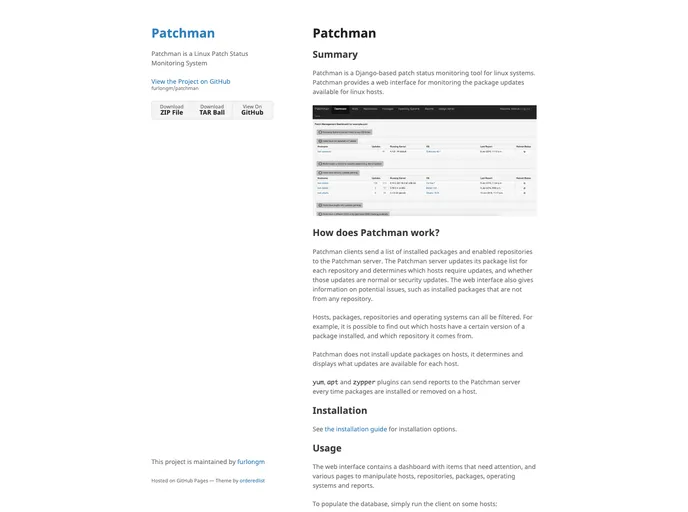
Patchman is an innovative monitoring solution designed specifically for Linux systems, built on the robust Django framework. This tool excels at tracking the patch status of various packages across different hosts, providing users with a clear web interface that streamlines the process of managing software updates. With Patchman, system administrators can efficiently oversee package updates, ensuring that their environments are secure and up to date.
The way Patchman functions is straightforward yet powerful. It relies on clients that report the installed packages and enabled repositories back to the Patchman server, which then evaluates the update statuses and alerts users to potential issues. This proactive approach allows for better management of system security, identifying both normal and critical updates that might need immediate attention.
Features
-
Web Interface: Offers a user-friendly dashboard to monitor package updates and potential issues in real-time.
-
Comprehensive Reporting: Clients send detailed reports on installed packages and repositories, helping to identify which packages are outdated or have security vulnerabilities.
-
Filtering Capability: Easily filter hosts, packages, repositories, and operating systems to access specific information quickly.
-
Compatibility: Works with popular package management systems such as yum, apt, and zypper, ensuring broad usability across various Linux distributions.
-
Proactive Updates: Determines available updates without automatically installing them, allowing administrators to exert control over the update process.
-
Basic Object Organization: Utilizes fundamental concepts like Hosts, Packages, and Repositories to help organize and manage data effectively.
-
Asynchronous Processing: Optionally integrates with Celery for efficient background processing of reports, enhancing performance during high-load scenarios.
-
Minimal Client-Side Dependencies: Requires only a few essential dependencies, making installation and integration simple across different systems.
- Django
Django is a high-level Python web framework that encourages rapid development and clean, pragmatic design. It follows the model-view-controller (MVC) architectural pattern, providing an extensive set of built-in tools and conventions to streamline the creation of robust and scalable web applications.