
Universal App Router
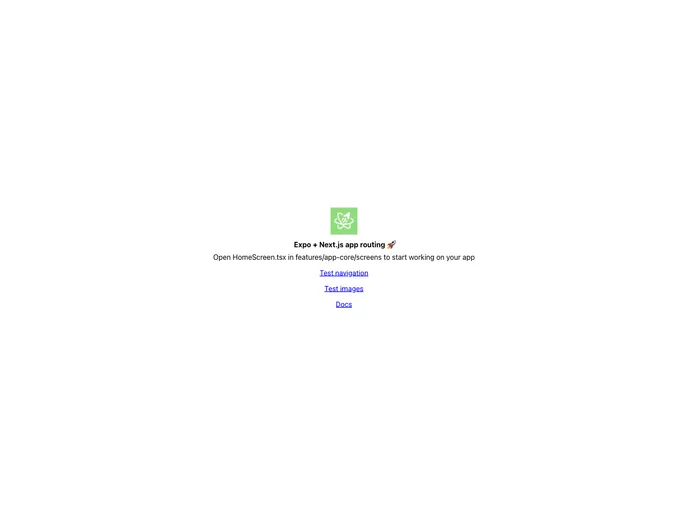


Minimal starter for a universal Expo + Next.js app with their app routers already set-up. To add automation and a scalable way of working: `git merge with/green-stack`
Overview
The Universal Expo + Next.js App Router Starter is an innovative project that combines the powers of Expo and Next.js, creating a seamless platform for developing cross-platform applications. This minimal starter serves as an excellent entry point for developers looking to utilize file-based routing, set up a TypeScript monorepo, and keep technology choices flexible. As a culmination of frequent experiments aimed at refining the Universal App Starterkit, it simplifies the development experience while highlighting potential areas for improvement.
Developers who are interested in building applications across web and mobile platforms will find this starter invaluable. With its clear documentation and practical starter functionalities, it invites experimentation and creativity in shaping the user experience. Whether you are just starting or looking to refine your existing projects, this template encourages exploration and growth.
Features
-
File-Based Routing: Utilize the app-dir structure for efficient file-based routing in both Expo and Next.js applications, streamlining navigation and organization.
-
Minimal Monorepo Setup: A straightforward setup with TypeScript allows developers to jump right in without needing a dedicated monorepo tool, keeping the focus on development.
-
Flexibility in Tech Choices: Developers have the freedom to choose their preferred technologies for styling, databases, and component libraries without being locked into predetermined options.
-
Hands-on Learning with Git: The starter includes git-based plugins that enable developers to learn through pull requests, showcasing code changes and file impacts for feature additions.
-
Easy Integration of Plugins: Pre-existing plugins are available, making it simple to enhance your application with features like Universal Auth and payment systems, offering a pathway to build complex functionalities.
-
Focus on Business Logic: With code generation and automation capabilities, developers can concentrate on their core business logic rather than repetitive tasks.
-
Comprehensive Documentation: Accessible and thorough documentation guides users through the setup and implementation process, making it easier to get started effectively.
-
Community Insights: The project encourages sharing knowledge and experiences within the developer community, enriching the learning process with shared insights.
- Next.js
Next.js is a React-based web framework that enables server-side rendering, static site generation, and other powerful features for building modern web applications.
- React Native
React Native is a framework for building mobile applications using React and JavaScript. It enables developers to write once and deploy to multiple platforms, including iOS, Android, and the web, while providing a native app-like experience to users.
- Templates & Themes

A template or theme refers to a pre-designed layout or structure that provides a basic framework for building a specific type of application or website. It typically includes good design, placeholder content and functional features, allowing developers to customize and fill in the details according to their specific needs.
- Expo
An open-source platform for making universal native apps with React. Expo runs on Android, iOS, and the web.
- Typescript

TypeScript is a superset of JavaScript, providing optional static typing, classes, interfaces, and other features that help developers write more maintainable and scalable code. TypeScript's static typing system can catch errors at compile-time, making it easier to build and maintain large applications.
- Zod

Zod is a TypeScript-first schema declaration and validation library. It allows you to define schemas that can validate data at runtime while providing excellent TypeScript inference, making it perfect for API validation, form validation, and type-safe data handling.