
React Library Builder
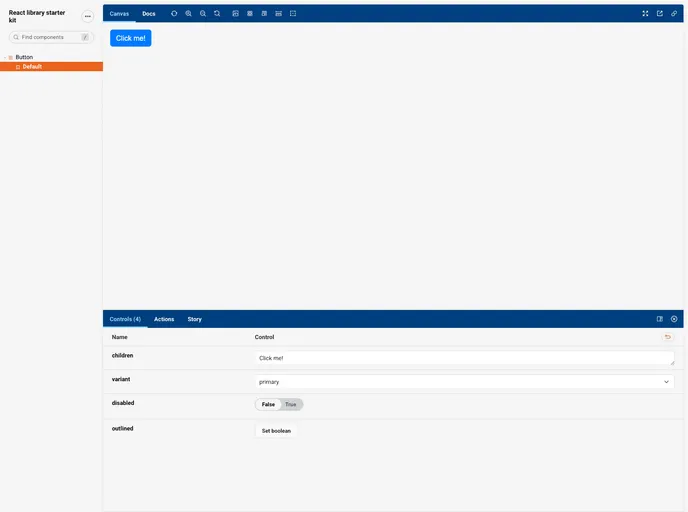




Get started with building your own React library using Rollup.js and Storybook with this starter kit
Overview
Creating a custom React library is an exciting venture for developers looking to streamline their workflow by sharing reusable components and functionalities across various projects. The React Library Builder offers a comprehensive solution that simplifies the process of building and publishing your own library. Through a well-structured approach, this guide covers everything from initial setup to deployment, ensuring that your components are not only functional but also easily accessible for other developers.
By following the steps provided, you can effectively develop your components, style them, ensure quality through testing, and even publish your library to NPM. Whether you're working on a personal project or collaborating within a team, having a custom React library can significantly enhance productivity and maintainability in your codebase.
Features
-
Easy Setup: Quickly create a new directory and clone the React Library Builder repository to kickstart your project without hassle.
-
Component Development: Effortlessly build reusable components by adding new files in the src/components folder and update the index file for easy imports.
-
Styling Support: Utilize both SCSS and CSS for styling your components, with guidance on using CSS modules if desired.
-
Testing Framework: Ensure your components work as intended using Vitest and @testing-library/react, with example test files provided for reference.
-
Linting Tools: Maintain code quality with ESLint and eslint-config-prettier, allowing customization of linting rules as per your project's needs.
-
Publish to NPM: Share your library with the world by publishing it to NPM, with straightforward instructions for setting up your account and configurations.
-
Storybook Integration: Create a Storybook for visual testing and deploy it to GitHub Pages for easy access, showcasing your components to others effectively.
- React
React is a widely used JavaScript library for building user interfaces and single-page applications. It follows a component-based architecture and uses a virtual DOM to efficiently update and render UI components
- Vite
Vite is a build tool that aims to provide a faster and leaner development experience for modern web projects
- Bootstrap
Bootstrap is the most popular CSS Framework for developing responsive and mobile-first websites.
- SCSS
SCSS is a preprocessor scripting language that extends the capabilities of CSS by adding features such as variables, nesting, and mixins. It allows developers to write more efficient and maintainable CSS code, and helps to streamline the development process by reducing repetition and increasing reusability.
- Templates & Themes

A template or theme refers to a pre-designed layout or structure that provides a basic framework for building a specific type of application or website. It typically includes good design, placeholder content and functional features, allowing developers to customize and fill in the details according to their specific needs.
- Eslint

ESLint is a linter for JavaScript that analyzes code to detect and report on potential problems and errors, as well as enforce consistent code style and best practices, helping developers to write cleaner, more maintainable code.
- GitHub Pages

Gridsome is a Vue.js-based static site generator that makes it easy to build fast and flexible websites and applications by leveraging modern web technologies like GraphQL, Webpack, and hot reloading
- Postcss

PostCSS is a popular open-source tool that enables web developers to transform CSS styles with JavaScript plugins. It allows for efficient processing of CSS styles, from applying vendor prefixes to improving browser compatibility, ultimately resulting in cleaner, faster, and more maintainable code.
- Rollup

RollupJS is a popular and efficient JavaScript module bundler that takes the code from multiple modules and packages them into a single optimized file, minimizing the overall size of the application and improving its performance.
- Storybook
Storybook is a tool for developing and testing UI components in isolation. It provides a sandbox environment where you can experiment with different props and states to see how your component responds.
- Typescript

TypeScript is a superset of JavaScript, providing optional static typing, classes, interfaces, and other features that help developers write more maintainable and scalable code. TypeScript's static typing system can catch errors at compile-time, making it easier to build and maintain large applications.