
Shopify Openship
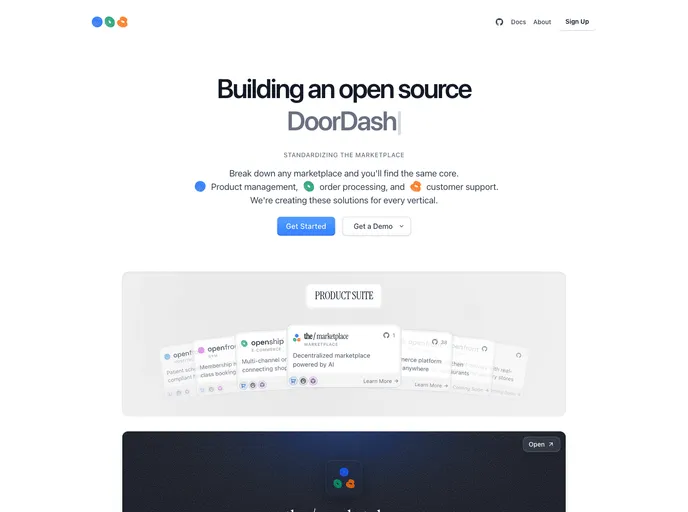


multi-channel fulfillment at scale
Overview
Openship is an innovative operations platform designed to streamline multi-channel fulfillment. With its robust capabilities, it allows businesses to manage their operations effectively while leveraging the power of modern technologies like Next.js and Keystone.js. Whether you are a developer setting it up locally or looking to deploy it on a cloud service, Openship provides the necessary flexibility and ease of use.
Not only does Openship support a comprehensive admin dashboard for managing your database, but it also offers a GraphQL playground to build and run queries effortlessly. This makes it an ideal choice for businesses looking to enhance their operational efficiencies while enjoying a seamless user experience.
Features
- Multi-Channel Fulfillment: Openship supports various sales channels, making it easier to manage orders and inventory from a single platform.
- Local Deployment: You can quickly set up Openship on your local machine by cloning the repository and configuring it with a PostgreSQL database.
- GraphQL Playground: Built-in playground allows developers to execute queries and mutations against the API, enhancing flexibility in data manipulation.
- Admin Dashboard: Utilizes Keystone.js for an intuitive admin interface, simplifying database management and user interactions.
- One-Click Deployment: Offers easy deployment options through services like Railway and Render, making it straightforward to get your application online.
- Docker Support: Easily run Openship in a Docker container, allowing for isolated development environments and seamless deployment.
- Extensive Customization: With environment variable configurations, you can tailor the application to suit your specific needs and requirements.
- Community-Driven: Openship builds upon the foundations laid by notable projects, ensuring reliability and robust support through its ecosystem.
- Next.js
Next.js is a React-based web framework that enables server-side rendering, static site generation, and other powerful features for building modern web applications.
- React
React is a widely used JavaScript library for building user interfaces and single-page applications. It follows a component-based architecture and uses a virtual DOM to efficiently update and render UI components
- TanStack
TanStack is a collection of high-quality, framework-agnostic libraries including TanStack Query for data fetching, TanStack Router for routing, TanStack Table for tables, and more. These tools provide powerful, type-safe solutions for common web development challenges.
- Tailwind
Tailwind CSS is a utility-first CSS framework that provides pre-defined classes for building responsive and customizable user interfaces.
- Headless UI
Headless UI is a set of completely unstyled, fully accessible UI components for React, Vue, and Alpine.js that empower developers to build their own fully accessible custom UI components. Headless UI allows developers to focus on building accessible and highly functional user interfaces, without the need to worry about styling or layout.
- Shopify
Shopify offers headless commerce capabilities through its Storefront API, allowing developers to use their own front-end technology to create custom storefronts or sales channels while using Shopify as a back-end system
- Ecommerce

Ecommerce websites sell products or services to customers through an online storefront. These websites typically include features such as product listings, shopping carts, payment processing, and order management tools.
- Eslint

ESLint is a linter for JavaScript that analyzes code to detect and report on potential problems and errors, as well as enforce consistent code style and best practices, helping developers to write cleaner, more maintainable code.
- Graphql
A website that uses GraphQL as a query language to manage data fetching and state management. This includes features such as a strongly typed schema, client-side caching, and declarative data fetching to streamline data management and optimize website performance.
- Netlify

Netlify is a cloud-based web development platform that provides a range of tools and services to help developers build, deploy, and manage modern web applications. It offers features such as continuous deployment, serverless functions, and CDN hosting, making it an ideal platform for building fast, scalable, and secure websites.
- Postcss

PostCSS is a popular open-source tool that enables web developers to transform CSS styles with JavaScript plugins. It allows for efficient processing of CSS styles, from applying vendor prefixes to improving browser compatibility, ultimately resulting in cleaner, faster, and more maintainable code.
- React Hook Form

React Hook Form is a performant, flexible, and extensible form library for React with easy validation. It reduces re-renders and improves performance by using uncontrolled components and native HTML validation, making form handling simple and efficient.
- Vercel

Vercel offers built-in support for deploying and hosting Next.js applications, making it a popular choice among Next.js developers.