
FAIRshare
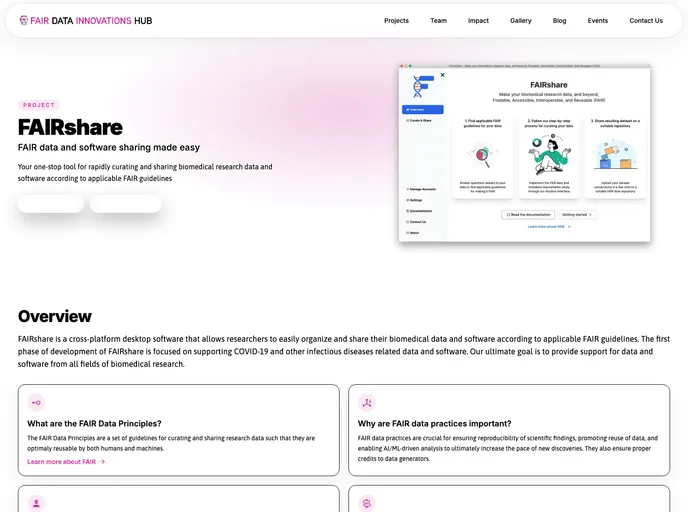


Simplifying the curation and sharing of biomedical research data and software according to applicable FAIR guidelines
Overview:
FAIRshare is an innovative, cross-platform desktop application specifically designed to help researchers organize and share their biomedical research data and software following the FAIR (Findable, Accessible, Interoperable, and Reusable) guidelines. With a particular focus on improving the transparency and accessibility of medical research, FAIRshare aims to support the FAIRification of critical research areas, such as COVID-19 and other infectious diseases. This makes it not just a tool, but an essential resource for fostering collaboration in the biomedical field.
The software is available on multiple operating systems including Windows, Mac OS, and Ubuntu, making it accessible to a wide range of users. Unlike other research management tools, FAIRshare emphasizes compliance with FAIR principles from the beginning, encouraging researchers to ensure their data can be effectively utilized and shared within the scientific community.
Features:
- Cross-Platform Compatibility: Available for Windows, Mac OS, and Ubuntu, ensuring a broad user base can access its functionalities.
- FAIR Compliance: Designed to help researchers organize data and software in accordance with FAIR guidelines, promoting better data sharing and collaboration.
- User-Friendly Installation: The application is distributed as an easy-to-install desktop software, minimizing technical barriers for users.
- Feedback Mechanism: Users can report issues, suggest improvements, or request new features via an easy-to-use feedback form directly within the application.
- Source Code Accessibility: For those interested in modifying or contributing to the project, the source code is available, supporting the collaborative development of the software.
- Privacy-Centric: Utilizes Google Analytics for anonymous user interaction tracking, ensuring no personal information is collected while improving the user experience.
- Active Development and Support: The development team actively encourages feedback and continuously works to enhance the software based on user input and research advancements.
- Vue
Vue.js is a lightweight and flexible JavaScript framework that allows developers to easily build dynamic and reactive user interfaces. Its intuitive syntax, modular architecture, and focus on performance make it a popular choice for modern web development.
- Tailwind
Tailwind CSS is a utility-first CSS framework that provides pre-defined classes for building responsive and customizable user interfaces.
- Eslint

ESLint is a linter for JavaScript that analyzes code to detect and report on potential problems and errors, as well as enforce consistent code style and best practices, helping developers to write cleaner, more maintainable code.
- Gulp

Gulp.js is an old but popular site building tool that automates various repetitive development tasks in web development, such as compiling Sass, minifying JavaScript, and optimizing images.
- Pinia

Pinia is the official state management library for Vue.js. It provides a simple and intuitive API with full TypeScript support, devtools integration, and modular design. Pinia replaces Vuex as the recommended state management solution for Vue 3.
- Postcss

PostCSS is a popular open-source tool that enables web developers to transform CSS styles with JavaScript plugins. It allows for efficient processing of CSS styles, from applying vendor prefixes to improving browser compatibility, ultimately resulting in cleaner, faster, and more maintainable code.