
Typegraphql Prisma Nestjs Example

Example use NestJS + Prisma2 + Typegraphql
Overview
The TypeGraphQL Prisma NestJS example showcases the integration of NestJS, Prisma, and TypeGraphQL, providing a robust framework for building scalable and efficient GraphQL APIs. This combination of technologies not only streamlines database interactions but also enhances the development process through powerful features like generative CRUD operations and intuitive query management.
This example serves as a starting point for developers interested in leveraging TypeGraphQL with Prisma. By setting up an example application, users can easily explore the capabilities of GraphQL interfaces, as well as experience the ease of data handling through Prisma's ORM functionalities.
Features
- Seamless Integration: Combines NestJS, Prisma2, and TypeGraphQL to streamline GraphQL API development.
- CRUD Operations: Automatically generates Create, Read, Update, and Delete (CRUD) operations using Prisma2 and TypeGraphQL.
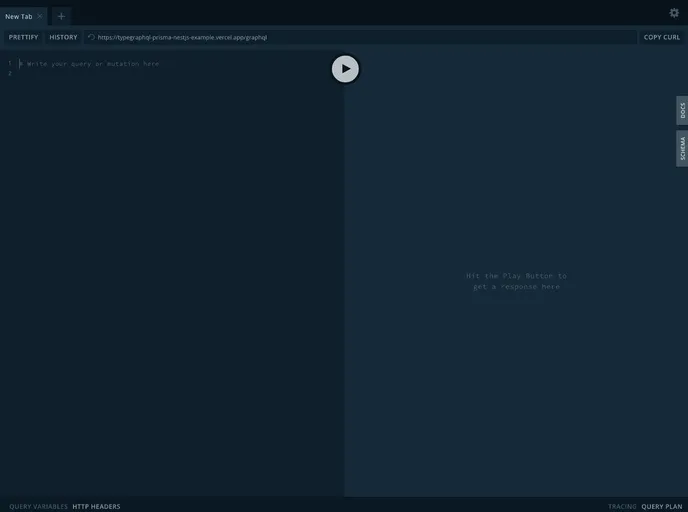
- GraphQL Playground: Access a user-friendly interface at
http://localhost:3000/graphqlto test and debug queries seamlessly. - Custom Queries: Offers the ability to create custom queries using NestJS, enhancing flexibility in data fetching.
- Utilizes HTTP Headers: Supports the use of headers in mutations, allowing for more dynamic data handling in requests.
- Real-time Development: Easily run the application and interact with generated files to better understand the workflow and data models.
- Comprehensive Documentation: Provides links to relevant GitHub repositories for further exploration of the codebase and additional features.
- Prisma
Prisma is a server-side library that helps developers read and write data to the database in an intuitive, efficient and safe way.
- Fullstack

A fullstack boilerplate provides a starter application that includes both frontend and backend. It should include database, auth, payments, user roles and other backend services to build a fully featured saas or webapps.
- Eslint

ESLint is a linter for JavaScript that analyzes code to detect and report on potential problems and errors, as well as enforce consistent code style and best practices, helping developers to write cleaner, more maintainable code.
- Graphql
A website that uses GraphQL as a query language to manage data fetching and state management. This includes features such as a strongly typed schema, client-side caching, and declarative data fetching to streamline data management and optimize website performance.
- Typescript

TypeScript is a superset of JavaScript, providing optional static typing, classes, interfaces, and other features that help developers write more maintainable and scalable code. TypeScript's static typing system can catch errors at compile-time, making it easier to build and maintain large applications.